Showing posts with label cuisine. Show all posts

Tuesday, 7 August 2018

Critical contextualization of my WIP - looking for style part 2 - food for thought in food photography

To create images of food I needed some inspiration about how interesting images of food are actually made which meant that I had to keep researching. This time, again, I was referred to people I should check out. The names were two and the books these people created did captivate my attention and gave me food for thought when it came to contemporary food photography (pun intended). 

The first one was the book Feast for the Eyes The Story of Food in Photography by Susan Bright. It is a collection of some amazing and really creative attempts to get out of the box and depict food in something other than just a white plate and a tabletop. The book is mostly about the history of contemporary food photography and features a lot of artists with their iconic and thought-provoking images. 

As it is with any collection, some images 'speak' more than others so I went for the more conventional styled images of the lot. I had to work with screenshots of the book's pages since it is unavailable online and it would take more than a month to reach Bulgaria (if someone doesn't steal it in the process) so there was no point in ordering it at this stage. 

Irving Penn's images (the image below - fig.1) were the first one that caught my eye exactly because they had something distinct that my images of food lacked - a signature style. He deconstructs the usual food and shows it in a quite unimaginable way. The first image that caught my eye was the one on the left - the deconstructed image of a salad with all its ingredients laid side by side but without mixing them into the dish we usually consume. This technique is really catchy so I totally intend to try it out on some of the Bulgarian dishes, just to see what happens. 

When I had to research his work, it turned out that I am already familiar with it, even though I had no idea about that (and I by no means consider myself an expert in contemporary photography artists). There is something about Penn's style that definitely makes me look twice and think what is actually on the image. 

The depiction of the classic combination of soft cheese and pears is not only novel as a kind of presentation but also looks quite tasty. I love his uncluttered presentation that draws the viewer's attention to the food in the picture and the simple and unornamented cutlery that does not look set up. After all, in real life most people use simple cutlery without any ornaments on it and eat in plain white plates and bowls. 

Fig 1 - Irving Penn's images in the Book:
Salad ingredients, New York, 1987
Ripe Cheese, New York, 1991

Some of his images even show food as something totally different from what we are used to seeing - like this deconstruction of French cuisine (fig. 2 below) - with its signature ingredients - frog legs, snails and I don't really know what the rest is, maybe an oyster (but that's something I've never seen in real life so it's just a guess). French cuisine is considered refined and the top of the top - when I look at this picture, however, I see the animals behind the dishes and it is a bit (in the case with this particular image - even a lot) gross. 

Without the whole flavour of refinement and the aura of French gourmet, these ingredients look like animals normal people would never think of eating (unless there is a famine). 

Fig 2 - Irving Penn -  “Eat This!,” Vogue, May 1989
When it comes to deconstruction, Penn's work is probably one of the most interesting to see since it had been created to intimidate and attract the eye, yet provoke some reflection on the things people saw. Working for Vogue, maybe that was his way of creating something novel out of a mundane and highly exploited subject (such as food). I must admit, it definitely works and inspires. 

As far as I know, no one in Bulgaria has tried out his approach to things and many of the Bulgarian dishes can be broken down to some basic ingredients that could be photographed in a similar manner, at least for the sake of showing what exactly goes into the dish. The plain white background is a bit dull to my taste but it can easily be changed into something else. 

Penn inspires me to experiment - if he could do this back in the 1970s, I think I can do something too in the 21st century. However, he was not the only one that I was referred to. 

The book Real Food by Martin Parr was also pointed out to me as showing the very opposite trend. While Parr tends to totally take food out of context - in many of his images he even refuses to present it cooked, Parr did the total opposite and entrench food within its cultural, historical and human context, showing meals just after someone has had a bite or at street stalls across the world. It is indeed 'real' food - not the polished compositions of food stylists or the detached and almost laboratory images Penn created for Vogue but a real-life bite that the viewer would like to have. 

Some of his images even have some documentary qualities - capturing candid moments (fig. 3 and fig.4 below). This type of approach - showing the unaltered reality of food and food consumption - is no doubt a good idea as many of Parr's images are definitely mouth-watering as the viewer just feels into that eater's place and can almost smell the delicious flavours. 

Fig. 3 - Martin Parr - GB. Scotland. Largs. Nardini's Cafe. 1999.
Fig. 4 - Martin Parr - GB. England. Cambridge. 2005.
Some images, like the one above, are quite funny and naturalistic but they do attract attention too. However, Parr's style is maybe too documentary and realistic for my taste. As much as I would like to go out in the streets and photograph people eating, that would be much more related to the human element of food consumption than to the food itself. Most of his images have that 'human element' - either a hand in the frame, or the food has already been eaten/ bitten into. 

I would like to focus much more on the recipes than on humans that eat them for the time being since I aim at presenting the common cuisine of the Balkans to people who have no idea (or very little idea) of what I have in mind, whereas Penn and Parr worked with much more familiar ingredients and recipes. 

Hence in my WIP, I need to find a balance between the documentary, the deconstructed and the highly styled and well-composed still life cook bookshots. 


Sources

https://www.pushinsky.com/store/just-not-kosher/

https://aperture.org/shop/feast-for-the-eyes/

https://www.vogue.com/slideshow/irving-penn-archive-food-photos

https://atelierdyakova.com/The-Story-of-Food#.W2mnPr8VTIU

http://uk.phaidon.com/store/photography/real-food-9780714871035/

https://pro.magnumphotos.com/Package/2K1HRG6S7S7S

List of figures:

Figure 1 – Penn, Irving - published in Feast for the Eyes The Story of Food in Photography by Susan Bright

Salad ingredients, New York, 1987
Ripe Cheese, New York, 1991
Available at: https://atelierdyakova.com/The-Story-of-Food#.W2mnPr8VTIU
[accessed 08 August  2018]

Figure 2 – Penn, Irving - “Eat This!,” Vogue, May 1989
Available at: https://www.vogue.com/slideshow/irving-penn-archive-food-photos
[accessed 08 August  2018]

Figure 3 – Parr, Martin - GB. Scotland. Largs. Nardini's Cafe. 1999.
Available at: https://pro.magnumphotos.com/Package/2K1HRG6S7S7S
[accessed 08 August  2018]

Figure 4 – Parr, Martin - GB. England. Cambridge. 2005.
Available at: https://pro.magnumphotos.com/Package/2K1HRG6S7S7S
[accessed 08 August  2018]

Critical contextualization of my WIP - looking for style part 1: an unexpected discovery

Throughout the module it turned out that my biggest problem was not scope (unlike module 2) but style. How to create a style of my own that is different from the cookbook stock images I am used to creating. Honestly speaking, that proved to be a tough call and greatly hampered my work. To experiment (because that seemed the obvious route) one needs to be brave and step out of their comfort zone. However, I am not exactly the brave type of person and tend to love my comfort zone so the first thing I needed to do was some research. 

Most of the food stylists I was familiar with did more conventional style photography showing food as it was and I will write more about them since some of them had quite the influence on my earlier works - in a different post. I was in need of a different approach so tutors and colleagues turned out to be of great assistance. 

One of the first people I was refereed to turned out to be a Bulgarian. What makes the whole picture even funnier was that I hadn't heard her name (which is strange since I thought I knew at least by name all prominent Bulgarian photographers). But I knew nothing about that woman, Eugenia Maximova or her project, entitled Kitchen stories.

This sounded like a fascinating start since she, too, focused on the Balkans, just like mine. Here is what she said for an interview for Lensculture, describing why she started the project:

'The people of the Balkans live in the shadow of a long history of wars, conflicts and unresolved ethnic tensions. Much of the energy that could have gone into building a future has been squandered on maintaining those tensions and the result is an impoverished present.

Young families must either pay exorbitant rents or live packed like sardines in their parents apartments. And most of those apartments are in the hopelessly ugly, crumbling concrete blocks which are the legacy of the communist era.

The term Balkan whether it is describing a culture or a geographic area, usually has a strong suggestion of the rural with a heavy overlay of the Orient. In whatever context it is used, the word reverberates with cultural and sociological connotations, with a sense of division and disagreement.

When I set out to tell a story about the Balkans, it was food that sprang to mind as being the only thing people in the whole region agree that they have in common. After five centuries of Ottoman occupation we have all continued to eat the dishes they brought.

Thinking about this shared culinary heritage, I began to wonder what was happening in Balkan kitchens these days. The kitchen is a multipurpose room, a space which reflects identity and self-perception. It embodies the spirit of the Balkan home and mirrors society as a whole.

People in the Balkans would rather spend what little money they have in a cafe than on interior decoration. The functional, unadorned style which results from this conveys a tangible sense of the region’s lost identity, the inevitable legacy of half a millennium under the Ottoman yoke and half a century behind the Iron Curtain.'

So, she decided to use the kitchen space as a metaphor and means of expressing the way people on the Balkans live today. In Bulgaria and most of the other Balkan countries, the kitchen is the heart of the home - where most of the family life goes. The living room is reserved for special occasions or guests so most of the time people gather, do their daily tasks and even have their meals in the kitchen. Actually, I am writing this on the kitchen table as this is the room in which I do most of my work.

A house without the smell of freshly cooked food is considered ill-kept and 'dead' and a woman who cannot make a simple dish is deemed 'not good' to put it very mildly. Kitchens are usually the pride and joy of any wife, the 'feminine' corner of the house which is decorated and adorned. Sometimes, it is just out of the need to restructure the space but sometimes it is driven by the need to 'show off' to the neighbours. Still, the kitchen space is of pivotal importance to any Balkan home and Maximova does have a valid point that the state of the kitchen usually tells a lot about what is the general condition of the family and the space they inhabit.

What Maximova did was travel around Bulgaria and document the interior of the houses she visited focusing on how the interior functions as an augmented whole to create an overall impression. In her works, however, she focused much more on interior (what is IN the kitchen space and how it is actually used or how it functions together with the rest of the other tools to form a whole set of symbols) than on the actual food being cooked. 

Her images look like they have been taken out of a memory book with candid interior images of the home. They are surreal at times, the whole impression being almost dream-like and thus transporting the reader back to a time long-gone when all that mattered was to be allowed to get out and play in the yard or to get that longed-for waffle or bar of chocolate. 

Fig.1 - Eugenia Maximova - Interior from Kremikovtsi, Bulgaria 
To viewers that are part of this culture, these images evoke a certain sense of nostalgia. Not because the 1990s (in my case) were a wonderful time to be in Bulgaria (or any country on the Balkans) but simply because one tends to idealize all childhood memories, even the most mundane ones. 

I can heavily relate to all images I decided to post here - because they look as if they have been taken years ago at my own house. My mother used to have those ceramic spice jars (fig.1 above) which she inherited from my great-grandmother and they are still somewhere at the back of the spice drawer (and yes, we have a whole section full of different spices). The singer on the poster used to be a chalga star when I was a teenager and most of my classmates would adore her. 

Fig.2 - Eugenia Maximova - Interior from Gorno Drjanovo, Bulgaria 
 The image above (fig.2) also projects a vivid image from my childhood (and not only). That type of salami is one of the most popular breakfast 'dishes' in Bulgaria since during the Communist times it was presumed the best quality salami. Made out of raw dried meat, it is quite tasty and most Bulgarians would eat it with anything (I do, at least, even with pancakes). When I was a child this salami was a mark of prosperity (if you can put it on your table). The jar is actually full of yogurt - on the Balkans when we use the word 'yogurt' we mean something that is not sweet. When I was a child, my mother would make yogurt herself in jars like this - that was before the era of supermarkets and packed goods. So this is like a snapshot of my childhood life. 

The next image (fig.3) I saw literally shook me because it is so alike my grandmother's kitchen. As if I am a child again and can smell the chilly peppers she used to bake (an still does) on the hot plates. 

Fig.3 - Eugenia Maximova - Interior from Kostenez, Bulgaria 

This type of stove is called Rahovets and it marked a whole era during the Communist period. It is a local brand, probably sold only on the Balkans, and (according to my whole family) the best brand ever. My mother used to cook on the exact same model up till a few years ago and that machine worked for more than 20 years. 

The icon on the next image (fig4) is also a common sight in Bulgarian kitchens, especially if the place is inhabited by older people. 


Fig.4 - Eugenia Maximova - Interior from Ruse, Bulgaria 
The last image I selected (fig.5) struck me the most since we had absolutely the same tablecloth at home and that sight - of a table covered in this print and the jars and bottles transported me around 20 years back in time. I must have been six or seven when my mother took me to an open air market to buy a new tablecloth and I picked this one because of the animals. Then, for years on end I would stare at the pictures and imagine what it would be like to be in a fairytale wood surrounded by all those beautiful animals. I even tried to draw the animals printed on the cloth. 
Fig.5 - Eugenia Maximova - Interior from Kremikovtsi, Bulgaria 
What I love about Maximova's work is that she does manage to incorporate the cultural environment into her images. These interior shots look almost like still life images or abstracts but to me (and to many more Balkan viewers, I guess) they are not still life compositions but fragments of real life. Looking at her images, I do think that I can make some use of the props she depicts - like jars, spoons etc . - in my own images to add in some local flavour. I would really like to be able to transport the viewer into a different time and evoke as strong feelings as she does. 

Her images, however, are focused on the living quarters rather than the food itself so apart from that, even though her style is quite interesting, I cannot put into practice more of it and apply it to my own work. 

My biggest problem with her project is much more ideologically oriented - or in other words, related to the message she tries to send out to the world, especially to viewers that are out of this culture and are totally unfamiliar with its specifics. 

What I dislike about the whole project is the one sided view of the Balkans as backward and torn apart. As Maximova herself stated in the interview, her idea was to show the 'lost identity' as she puts it of the Balkan people. Being at the crossroads of Europe, the Balkan people have met with a pot of other invaders through the centuries but this doesn't mean they have lost themselves and their rituals in the process. On the contrary, I believe that a new identity was forged - something that combines bits and pieces from all peoples that mingled on the territory. That makes the people on the Balkans unique, not backward or lost. 

Hence her one-sided attitude and deliberate selection of old and withered kitchens really annoys me. As if she aimed at depicting Bulgaria as the poor neighbour that has been robbed and now crumbles. The nostalgia these images evoke for me will be turned into either dismay or disgust in the eyes of a Westerner. The author herself has studied and now lives in Vienna ever since her late teens - quite a stark difference from what it is like to live in Eastern Europe - so I guess that the attempt was totally deliberate as some ex-pats tend to forget where they come from and hence tend to regard everything related to their home country as 'backward' and 'falling apart'. 

I totally wouldn't blame the Iron Curtain or the Ottoman rule for the state of those places. These are just rural areas (all the places cited are actually villages or small towns) inhabited mostly by elderly people so that they see no reason to buy new appliances or lack the funds to do so. That is why the interior gradually deteriorates - the peeling paint and the withered prove it. But such a generalization is far-fetched, to say the least. 

So, as beautiful and thought-provoking her images are, I will be incorporating little of her style and idea into my works as my aim it at the opposite end of the spectrum. 

Sources:

Eugenia Maximova's website - Kitchen stories
https://www.emaxphotography.com/kitchen-stories-from-the-balkans
https://www.lensculture.com/articles/eugenia-maximova-kitchen-stories-from-the-balkans

List of figures: 

Figure 1 – MAXIMOVA, Eugenia - Interior from Kremikovtsi, Bulgaria, 2010
Available at: https://www.emaxphotography.com/kitchen-stories-from-the-balkans
[accessed 08 August  2018]

Figure 2 – MAXIMOVA, Eugenia - Interior from Gorno Drjanovo, Bulgaria, 2010
Available at: https://www.emaxphotography.com/kitchen-stories-from-the-balkans
[accessed 08 August  2018]

Figure 3 – MAXIMOVA, Eugenia - Interior from Kostenez, Bulgaria, 2010
Available at: https://www.emaxphotography.com/kitchen-stories-from-the-balkans
[accessed 08 August  2018]

Figure 3 – MAXIMOVA, Eugenia - Interior from Ruse, Bulgaria, 2010
Available at: https://www.emaxphotography.com/kitchen-stories-from-the-balkans
[accessed 08 August  2018]

Figure 5 – MAXIMOVA, Eugenia - Interior from Kremikovtsi, Bulgaria, 2010
Available at: https://www.emaxphotography.com/kitchen-stories-from-the-balkans
[accessed 08 August  2018]

Friday, 3 August 2018

Project development - Balkan food - the gastronomical crossroads of Eastern Europe

Choosing food photography and integrating it into my project meant that I will be photographing something different from spaghetti and French fries. The good news was that the Balkans are maybe one of the richest places in terms of local cuisine. 

Throughout the centuries, cuisine was layered on the Balkans. First the Romans, then the barbarian tribes during the Great movement of peoples, then the crusaders, then the Ottoman turks. Combining this with the versatile climate on the Balkans - having a lot of sea and wide rivers providing for sea food and fish, mountains which can supply people with game and fresh meat (if they raise cattle), plains that would yield vegetables, fruit and grains and a lot of spices that naturally grow in the area, i can proudly say that the Balkans are one of the best places to have a treat. 

Mixing of the Mediterranean diet of the southern Balkan states and that of the ones further inland with the nomadic cuisine of the Ottoman turks led to a unique mix of flavours that cannot be tasted anywhere else. 

Co-existence for centuries led to another particularity - that most Balkan countires have similar recipes. Here is a quick example: 

The Bulgarian 'Shopska salata' which is a simple salad made out of cucumbers, tomatoes, white cheese, onion and peppers is not actually Bulgarian (here is a pic in case you don't remember how that looks like):


The recipe was invented in the mid 20th century when the national tourist operator, Balkanturist, had to come up with something with the coulours of the Bulgarian national flag and to make it easy to consume and remember. A quick research I had to do for my Cultural Studies BA showed that Shopska salata derives from two other Balkan salads - the Serbian salad and the Greek horiatiki that have the same ingredients. 

The recipe became so popular that some years ago it wa declared the most popular recipe in Europe. Still, even though it is famous as a Bulgarian dish, the recipe is much older and should rightly be deemed 'Balkan'. 

Same goes for other 'traditional Bulgarian dishes' such as the famous banitsa (another Bulgarian favourite): 


It is a traditional dish made of eggs and cheese wrapped in filo pastry. However, this thing has direct relatives in all Balkan countires - the Greek pita and the börek varieties that exists all over the Balkans are the most famous among them. The pic above shows a traditional Bulgarian breakfast on a Sunday morning - banitsa and ayran (another favorite basically yogurt, water and salt). 

So, speaking of recipes, I would rather go for Balkan recipes, not Bulgarian, since it takes a whole research to trace back the origin of each recipe. Still, there are a lot of tasty treats available so I had a wide variety to choose from. 


WIP development - when you food images lack soul

I had no idea what was wrong with my previous images - from the challenge - but somehow sensed that something is not quite right. Honestly speaking, the darkened background was something I was not used to and was quite foreign to me. It may have worked for the Dutch masters BUT to me it looked strange. 

So, for the next webinar, I decided to create something that is much closer to what I am used to doing. Frankly speaking, I had no time to use the artificial light so I went for my tried and tested method. The backdrop was sort-of-traditional Bulgarian rug and the food was whatever was available at home at the time. 


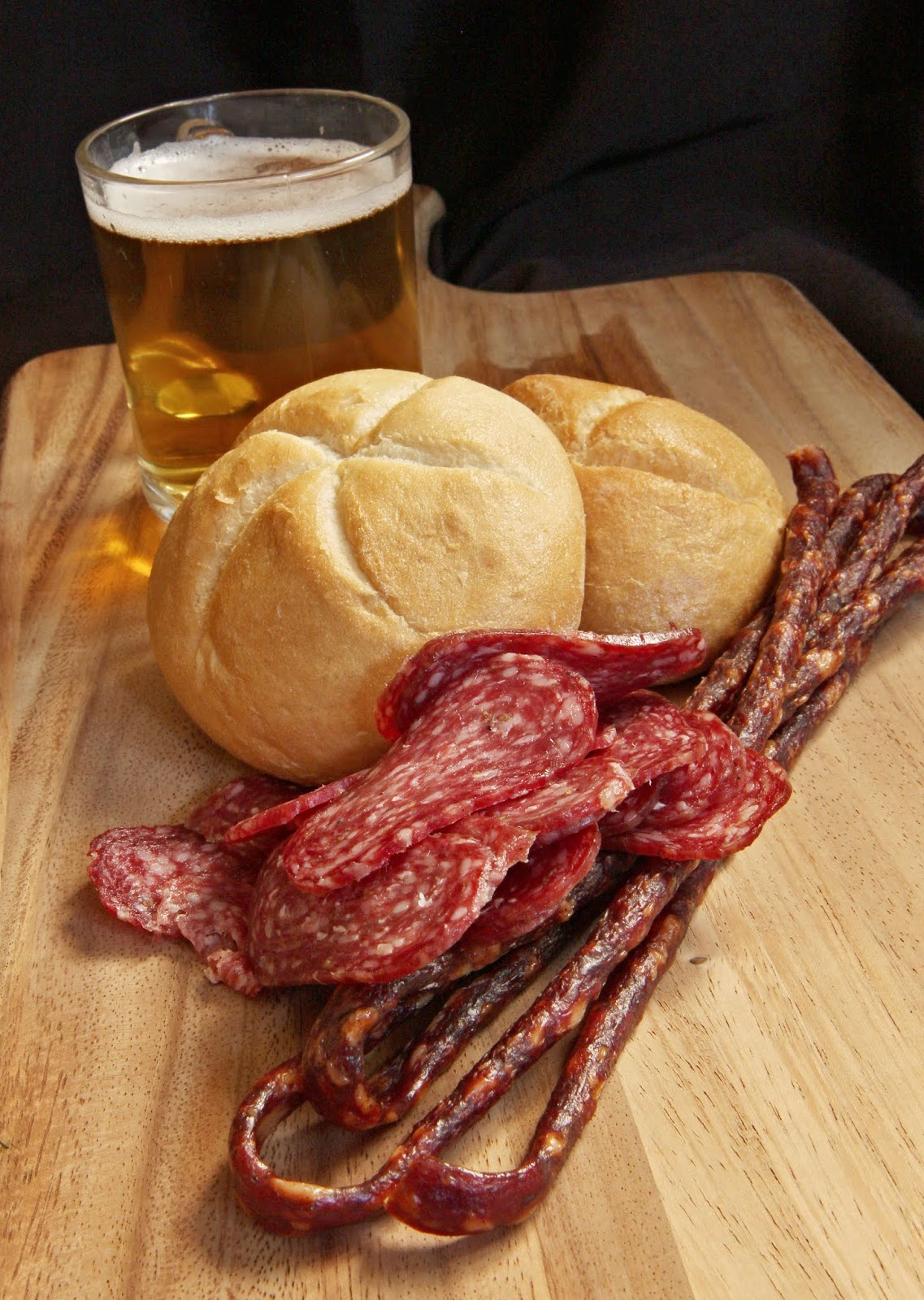
When I took those two, I was quite pleased with the result. They featured both the darkened background and the new idea (in this case, showing the abundance in the whole picture) and I used the natural lighting I am such a fan of. However, the problem in the pic lay in the things i photographed. Beer and this type of bread are by no means traditional or Bulgarian. 

So I went on to photograph something traditional, looking traditional (in my opinion): 


The 'model' was liutenitsa - a traditional Bulgarian appetizer made up of peppers and tomatoes (each family has a recipe of its own). In Bulgaria, we love saying that liutenitsa goes well with anything and we mean it. Some 200 years ago, it was the type of comfy fast food farmer could take out with them in the fields and eat when they have time. It was also a means to preserve produce. 

So, my idea in this image was to recreate a farmer's lunch, the way I thought it would have looked like a few centuries ago. To be honest, I recreated an old shot - this one (here the model is another traditional Balkan appetizer made of peppers and aubergine, called Kiopoolu). 


I was quite pleased with the end result so imagine my dismay as I was told that images like this are no good. To my question why, I was shown an image of a Dutch still life (again!) to see the difference. I can't find the exact image, but here is another one, just for illustration: 


Then it dawned on me what the problem was - my images looked set-up and artificial, made up for the sake of composition. They lacked life and soul. Unlike the Dutch still life paintings that looked so vivid and alive. 

So, the dire question arose - how do I do a 'live' composition of traditional Bulgarian food that would show off my skills as a photographer but still show the food as it is and at the same time incorporate some kind of a personal style ... 

Sources:
http://www.artic.edu/aic/collections/artwork/21682

WIP development - how do you mimic the Dutch masters with artificial lighting and on a budget

Since I already had an idea of how to do my images - the first point was to mimic the Dutch masters - I decided to go for something easy and to try and do something I have never done before. The idea was to use a simple dish - in my case that was Shopska salad (quite a traditional dish on the Balkans, made out of tomatoes, cucumbers, peppers, onion and a lot of white cheese) - and to try and create something that looks like a Dutch still life. 

The setting was created on the living room table since the living room is the darkest one at home. I planned to do something I have never done before - in my case try new style and composition AND use artificial lighting. I am much more used to working with natural light - when I had to take pics for Shutterstock, natural light was the only thing I used. However, the challenge set by Michelle involved me taking some kind of a risk so that I manage to push myself a bit. 

As a start, it turned out that working with artificial lighting may give you all the control but when you have no idea what you want to achieve (apart from some vague image in your head), things can get complicated. So it took me around an hour to figure out what I wanted to depict and a few more minutes to set up the whole thing.

The end result truly looked like nothing I have done before - new type of background (for years, I had been avoiding the dark backgrounds), new type of composition as I tried to mimic the Dutch still life type of compo and a whole new concept of how I should be doing my images. 


I chose the salad and the glass to show a typical farmer's dinner at the local tavern (hence the yellow liquid that is actually mint tea since we had no rakiya at home). Took me a lot of time to figure out how to do the lighting so that the glass is lit from above and I have some kind of tecture (first time working with that light). 

I tried a few angles, such as this one:


Even though I liked the end result, the whole thing looked so different from what I used to create, that it was a bit foreign to me. I did the challenge BUT somehow couldn't feel the image. What was worse, I still lacked some ideas on how to do the rest of the images. 

As my mother exclaimed when I showed her the images - they simply looked dull in some way. Well. the point was to challenge myself and so I did but the overall concept was completely eluding me. 

Project development - some research on the history of still life (part 1)

In order to do decent images of food, one needs to look at how actually images of food are done. Since my only experience was taking pics of food for stock sites (and social networks) I needed to look up someone artsier than I am. One of the first ideas, of course, was the first-ever 'images' of food produced which meant delving back into the mists and dust of time. And I happen to be quite the fan of history so that was an easy task...

A quick research showed that one of the first to create images of food were the Ancient Romans - images of food and tasty morsels are found on the walls of the cauponae (taverns) in Pompeii. These used to serve as a menu for the guests so that, even if they knew very little Latin, they could simply point out at the picture. Images of half-eaten food were very popular floor mosaics in the houses of the rich at that time. It was believed that if the floor is littered with images of food, the feast would go even smoother and better. 


This fresco (fig. 1 above) came from the house of Julia Felice in Pompeii and it is quite naturalistic. The scene is quite simple and depicts what the painter saw.


However, this ancient technique was much like the modern fast food menus where you get exactly what you see on the picture. Hence, this type of imagery was not exactly the 'artsy' and 'signature style' approach I needed. So I did a 'rewind' up till the 16th century. When a new style of depicting food emerged and with it - a new school of painting - that of the Dutch masters. They are universally known as being the first to depict food as it is and yet express much more - feelings of nostalgia, of togetherness etc. This sounded much more appealing to me.

A quick research showed that one of the first to create images of food were the Ancient Romans - images of food and tasty morsels are found on the walls of the cauponae (taverns) in Pompeii. These used to serve as a menu for the guests so that, even if they knew very little Latin, they could simply point out at the picture. Images of half-eaten food were very popular floor mosaics in the houses of the rich at that time. It was believed that if the floor is littered with images of food, the feast would go even smoother and better. 

The fresco above is also from Pompeii and depicts bread and figs and looks much more like something drawn to either attract attention to whatever was on offer at the store or stall.

However, this ancient technique was much like the modern fast food menus where you get exactly what you see on the picture.

Another amazing mosaic this time, again from Pompeii that looks much more like something to be pointed out by clients than like an artistic expression.

Hence, this type of imagery was not exactly the 'artsy' and 'signature style' approach I needed. So I did a 'rewind' up till the 16th century. When a new style of depicting food emerged and with it - a new school of painting - that of the Dutch masters. They are universally known as being the first to depict food as it is and yet express much more - feelings of nostalgia, of togetherness etc. This sounded much more appealing to me. Once again my Cultural Studies and my love for history to be put to the test

The Dutch masters, my research showed, started developing their art when a huge swing in trade routes made the Netherlands the trade center of Western Europe. At the time - throughout the 15th and 16th century - the people there were experiencing a huge boom in terms of living standards, access to new goods and new exotic food. So the first modern 'still life' images of food were created in order to show the abundance of new things that have come to their shores.


The first still life above (done by Kevin Best in the 20th century in an attempt to mimic the Dutch masters) showed the abundance of new exotic goods - basically, food was piled up on a table and depicted as it was -  oysters, crab, even the lemon could be deemed exotic and expensive.  As time passed, new techniques appeared and the still life paintings changed in style. New ideas appeared and the Dutch masters started depicting much more lively scenes - as if the people had just left the table:


The image above, done by Pieter Claesz in the 17th century is part of this trend.

So far I had some ideas of what I should be doing. Another matter was how to do it.

Sources:
http://www.softwaredidattico.it/EducazioneAlimentare/ipsia_enrico_berlinguer/images/affresco_tavola.jpg
http://bodegonesdecocina.blogspot.com/2011/09/antecedentes-del-bodegon-roma.html
http://www.pinsdaddy.com/ancient-greece-slaves-eating_bcAC%7C45qQOG3r4mEeHnO9QGr8g2sXbzYD9syeVW1vK0/
https://www.repro-tableaux.com/a/pieter-claesz/nature-morte-avec-le-pois.html
https://www.liveinternet.ru/users/andre_art/post265064794/


Thursday, 2 August 2018

WIP development - food photography - an old passion rediscovered

Having selected food photography as my new theme meant that I had to remember how things are done. I started taking pictures of food back in 2014 when I struggled to get accepted as a Shutterstock contributor. It took some time but eventually I managed to become part of the community and started building a portfolio. 

The whole process involved a whole lot of 'photo sessions' of anything that could possibly sell. Problem was that images that used to sell in stock image banks at the time were, as my mother loves putting it, 'lifeless' and 'banal'. Still, that was the style I am used to as I have done it for quite some time. 

The other problem with food is that the Internet is full of food images. Social networks, such as Instagram and Facebook and even Pinterest are full of mouth-watering images. Some of them are done by professionals, some by passionate amateurs. I have a friend like that - she is a passionate Instagrammer and I have to admit she does manage to capture some stunning angles. Here is one image of hers - from our most recent evening out:


There was the rub though - I can create images like that, no doubt BUT what I need for the sake of the project is a signature style. All tutors keep telling me that. But how do you find your signature style? Throughout the years, I have worked out to make my images recognizable (which means that people who are familiar with my work would be likely to point out which of the images they see is done by me and which is not, regardless if they have seen that particular image or not). 

Still, compared to most other people on the MA, I still feel like a total novice, yet to find what is what and that 'signature style thing'. Sometimes, I create something that stands out, at other times, things simply wouldn't work. I've experienced that throughout the previous modules since when I go out to take pictures, I count on my 'gut feeling' of what is good and what is not. 

When it comes to food though, I lack many ideas as to what I can experiment with as I have no professional studio equipment (most of my images are taken using natural light on the table in my bedroom using whatever was at hand as a backdrop). I admire food photographers and I am quite a fan of a few of them. Most of those people are traditionalists, so to say. 

So - what I needed was not only rediscover my passion for food photography BUT also somehow find a style that would suit me somehow...

Project development - struggles with scope - how GDPR changed everything

This module posed some new challenges for me. Unlike last module when I had a clear idea of what I wanted to do from the very beginning, this time I was in two minds. The two options I couldn't decide between were street and food photography. 

Both genres are to be incorporated into the Culture Crossroads project so I decided that it was high time I worked more on that aspect of the project. During the past few modules, I focused much more on architecture and history and a bit of landscape photography but had virtually no time for street and food photography.

Naturally, a culture is the sum total of both history, architecture, cuisine and mentality (along with the customs, traditions and rituals that go with it) so my first choice of a topic was street photography. 

Truth be told, I am not a street photographer and cannot say I am good at it. Most of the street photographs I have are accidental shots of people, stolen moments that I noticed around me. Paradoxically, I have never intentionally gone out to take street shots. One of the reasons is that I am too shy, I think, to approach people and have their picture taken.

The image above is one of the first-ever street images I have taken. This girl was just sitting next to me at the bus stop, waiting for the vehicle to arrive. I used my phone, to avoid being noticed. The quality is really poor but I loved her colourful bracelets.


Another image I took by accident, just because I had a compact camera with me and the mother and child didn't see me. Still, with the GDPR as it was initially released, I wouldn't be able to capture moments like that without permission.


This image was just a coincidence - I came to take pics of the building but then I saw this man. This place is known as the Bulgarian 'wall of weeping' since it used to be the place where university admission exam results were displayed. 20 years ago, you had only one shot per year which meant that you can choose to apply to only one university (if you were a girl) or to the university and military academy (if you were a boy). If they didn't accept you, you had to work for a whole year before being eligible to apply again. So, naturally, this place has seen a lot of tears, hence the name. Today, examination results are still displayed here BUT very few people go since there is an electronic system where you can check your results online. This man, though, had come here to see the results in person and he wasn't very pleased. I had a few seconds to capture this moment and I wasn't even looking for something like that.

Usually, I find the most interesting street shots, when I am not looking for them - like the two examples below. What is more - people in  Eastern Europe are not exactly keen on having their picture taken.


They are also quite suspicious to anyone with a camera. If that 'anyone' is a stranger with a DSLR, things get even worse. So this module I wanted to experiment with this genre and see what I can do. However, there was a huge obstacle - the GDPR.

When the GDPR regulation came into effect a few weeks ago, people in Eastern Europe began fearing doing anything until the matter is legally resolved. According to the regulation, any kind of data, images of people too, were considered personal data and were subject to agreement between the photographer and the model. This meant that any photographer aiming at taking pics of people and candid street scenes would have to have a written permit from everyone in the frame BEFORE pressing the shutter button. In Bulgaria there was an outrage from photo journalists and photographers in general, so currently the regulation is being modified according to the Bulgarian legislative system. Unfortunately, by the time the whole adaptation kicks into effect, this module would be over so even though I wanted to try my hand at street photography, it simply had to wait. 

Hence, to be on the safe side, I chose something else I have been fond of for the past years - food photography. As an integral part of any culture, the local cuisine is the best way to really feel the place you are visiting. So far, however, I have concentrated mostly on other aspects of my project and have used each opportunity to see more and document more of the Balkans. I kept postponing taking food images for two reasons:

1) food photography can be done in a controlled environment and the only thing you need is a quiet place and some food to photograph

2) I've had no time to do something new

As for experience, I have always been a fan of food photography - actually started with photographing whatever food was at hand at home and then moved on to creating some more difficult compositions and created a makeshift studio in my bedroom (a really makeshift thing). Still, things worked but as I progressed, I found out I want to photograph other things.

Still, I made up my mind to try and produce images of local Bulgarian food for the sake of this module. There was a problem though - how do you photograph your own cuisine and make it appealing to both locals and foreigners from the other end of the world without making it look like a cliche and doing something artistic?

I am yet to find out.


Guardian of the past

Or what happens when you decide to edit an archive shot with the idea of showing that you are a better editor than your pervious...