Showing posts with label work in progress portfolio. Show all posts

Thursday, 2 May 2019

FMP - final - the exhibition - some thoughts

For the sake of the exhibition, I used the small café of a friend of mine for the exhibition venue. It is a small cosy place that is to be opened in a week. The panes were hanged along the walls and created a really nice feeling of “being at home” since there is some furniture in the place. Overall, I am pleased with the display (how the images look like when displayed) and I aimed not to show the way the images are suspended (hence the colourless cord used to hang them). 


The event of the exhibition, with the address and the images of it are available online (the event is still ongoing, you can access it here: https://www.facebook.com/events/336460533917160/ ) received a really good reach due to help from colleagues and friends. The friend who owns the place also agreed to do the catering for the venue and to let me use her place as a gallery for as long as I want – hence the exhibition will be on display by the end of May. She even asked if I can leave it even later as it goes well with the interior of the place (it has no wall art so fat and there are too many walls that need covering). 

An image with some of the interior and some of my panes

The size of the panes was discussed with the owner before I ordered the prints so that they do not look too big or ridiculous (the place is a small one so big panes would simply not do) Hence the images were printed at 40 centimeters by the longer side. Not too small but somewhat enough for people to see and read the text. 

There was also an opening video (see here https://www.youtube.com/watch?v=FduVV2n387o and as far as I can see quite a few people have already seen it on my YouTube channel. 

One of the problems about the exhibition was the date – 01 Mat is a bank holiday in Bulgaria and the Orthodox Easter was the previous Sunday so most people had the whole week off and were out of town. Another problem was the location – the place is new and it is not very well geo-tagged so some people got lost on the way to it (I posted a map and directions, just in case). However, it is to be geo-tagged soon so that problem will be eliminated. I expect more people to come after the holidays. 

What I love about it is that allowed me to collaborate with a dear friend of mine and to be part of her dream (to have her own restaurant). Besides, when the place opens, my exhibition will have a second opening and will get a lot of media attention (since my friend is an influencer and a young entrepreneur). 

Saturday, 27 April 2019

FMP - final - historical significance part 1

When I started my FMP, one of my main motivations was to actually provide good and interesting-looking images. The initial ides of "Sofia - grows but never ages" was to present the viewer with beautiful re-photographed places. Later on, however, it dawned on me that the places I usually select are much more than just beautiful buildings that have stood the test of time. 

Actually, most of the buildings that have been included in the project, have a controversial story to tell. Sometimes, the story is so controversial, that even Bulgarians have some trouble understanding it. 

This place - the monument of Vasil Levski - proved to be one of the most spectacular images in the whole project. Apart from the obvious change in landscape - in the 1910s it was at the very outskirts of town whereas it is in the ideal center - this place is one of the most significant ones in modern Bulgarian history and a special landmark within the city. No matter how much the urban landscape changed throughout the years, no one has ever thought of removing this monument. 

Here is why - the year was 1871 and a young man tried to defy the mighty Ottoman empire. At the time, the empire was declining BUT still holding its firm grip on the people on the Balkans. This one man, born in Karlovo town, in Stara planina mountain, decided to rally the peasants to a large-scale national rebellion. To do this, he started visiting village after village, talking to the people and explaining to them what needs to be done. Whenever he went, a revolutionary committee was founded. The purpose of the committee was to collect money, weapons and new enlists who would rise as one on the day of the great rebellion. It took the young man two years to visit almost every place where Bulgarians lived and to create a committee there. Almost each and every village in Bulgaria has a story of this man visiting and how he tricked the Ottoman posse. He was a real James Bond of his time and a master in disguise - once we has a cattle herder, the other in interpreter to some pasha. His name? Vasil Ivanov Kuntchev or as he remained in Bulgarian history - Vasil Levski (the nickname was supposedly given to him because of his long "lion-like" leap while he was in training for one of the first-ever organized attempts to liberate Bulgaria from the Ottomans, back in 1868). 

As the organization grew bigger, too many people were involved in it and not all for a good reason. O failed attempt to rob the local Ottoman garrison of their salaries led to the capturing of some important organization leaders who, in turn, shared the names of the organization leaders. Levski rushed to Teteven (a town in central Bulgaria) to retrieve the archives of the organization which basically contained the names, addresses and connections of everyone within it, as well as the ledger books. So he did, but was captured close to Teteven. Then he was sent to Sofia for interrogations. 

Throughout the interrogations and torture he said no names (his famous phrase being "There are no others, I am alone.") and was sentenced to death. He was hanged in 1873 in the outskirts of Sofia - the date being 19 of February. His body was supposedly then buried somewhere around Sofia by a gypsy man who passed nearby. The theories are many. 

What is certain is that Levski was a visionary well beyond his time. What he tried to do was something novel and revolutionary - Bulgarians love to speculate what would have happened should he had lived to accomplish his deed. He is a canonized saint and a Bulgarian national hero - the epitome of someone who would sacrifice everything for the homeland. 

This monument was erected shortly after Bulgaria was liberated (that was in 1878, only 5 years after Levski was hanged) at the place which was believed to be the one where he had been hanged, Each year, on the 19th of February, it is a place of mourning and a really important landmark. There is no Bulgarian who does not know what this is and why it stands there. 

The monument of the Tsar-liberator situated on the homonymous boulevard is one of the most controversial places in Sofia. Mainly because that 'tsar-liberator' on top of the horse that now stands just across the National Assembly building is not Bulgarian. He is Nickolas II of Russia, the Russian emperor that initiated (and somewhat managed to win) the war of 1877-1878 which remained in Bulgarian history as the "Russo-Turkish Liberation" war.

Immediately after the Liberation, the monument was built - in the new city center, flanked by new, Viennese and Parisian style buildings. At the time it seemed appropriate to honour the country that helped with the liberation. However, as years passed, moods swung and I have heard many claims such as - having the monument removed and placing a statue of a Bulgarian khan in its place. 

That monument remains one of the symbols of Sofia despite all that and one of the most easily-recognizable symbols of Bulgaria as a whole. 


Just like the monument in the previous image, this one is of exceptional significance and quite the controversial one. The Saint Alexander Nevski cathedral is one of the landmarks of Sofia and currently (until the Romanians finish their church in Bucharest) the biggest Christian Orthodox church on the Balkan peninsula. It's style is peculiar - a crossbreed of traditional Orthodox style and that of Saint Sophia in Istanbul and its golden domes can be seen from virtually any part of the city even today. At the time when it was built, it was a massive construction, funded and owned entirely by the Russian empire (it was supposed to be a gift for the new state). The construction took several years and after that the building was donated to the Bulgarian state. 

What caused the problem was the actual patron saint of the church as Saint Alexander Nevski is a purely Russian saint (not honoured at all in Bulgaria) and one of the first Russian rulers (he was a kiaz - warlord - of the Vladimir region in the 13th century). He is of particular significance to Russian history BUT has nothing to do with Bulgaria. Hence, there had been several attempts to re-name the church but public opinion prevailed and the church retained its Russian patron saint. 

A curious fact is that when renovation activities took place 15 years ago, all of the gold (several kilograms) were donated by Russia for the restoration of the signature golden domes. Those same domes brought trouble to the city center during WWII as the pilots were instructed to target them. Miraculously though, the church remained intact. 

These days, there is a new drive to rename the church but only the test of time will prove if this the attempt will succeed. 

Sunday, 31 March 2019

FMP - research - the art of re-photography - part 2

As good as Levere and Maciejewski’s projects were in terms of scope and angling ect., they looked too traditional and something was missing for me. Maciejewski and Levere made me understand what re-photography is about and to get a glimpse of how it should be done – same angle and preferably same post-processing used – but I work in colour, not black and white and wanted to incorporate the coloured image into my work as well.

I started looking for a re-photographer that has chosen to break the canon and ditch the black and white for his/her modern images. I thought that the contrast in colours will lead to even starker contrast between the vintage image and the modern one. 

That was when I came across Vincent Zénon Rigaud’s work and was fascinated by it. He is a French photographer dedicated to re-photographing his native town of Reims through the ages. What I loved about his work (when I saw his website I was amazed by the editing idea) is that he not only re-photographs the place, he blends in the two images to create a new, stunning image, encompassing both old and new. (see fig.1 below)


Fig.1 - Vincent Zénon Rigaud – Reims. 2017 (cover of a book by Yann Harlaut)

I loved the approach since it was the first time I see something like that alongside the other re-photography projects, the one Rigaud did stood out. It was unique and not only showed two images side by side, it made a blend of two images, two historical periods and two traditions in one final image which made me stop and think. He definitely had a distinctive style of his own and I would have liked to do something similar. 

Very few people in Bulgaria, if any, are doing re-photography projects, at least none that I am aware of. While looking at the projects of Levere and Maciejewski I saw an idea but nothing that would make me stand out. Their projects are inclined towards documentary photography and I must admit, I am not that much into it to be able to produce something of value in this style.

Rigaud’s project was a different universe for me – artistic, interesting, and even eclectic to some extent. It combined old and new in one photograph (which would be much easier to display) and the final result showed both the stark changes (each of the images is manipulated in such a way so that the final blend shows the most of the changes that occurred in between the captures) and the artist’s view.

I liked his approach in terms of post-processing that I intend to use it in my own project (or adapt it, in case it does not work for the images I select). To me, Rigaud’s work is novel, artistic and documentary. What is more, he primarily works in colour and the style of his other images (non-related to this project) is similar to the style I employ when post-processing my images. I think I have found a way to stand out within the photographic community and the general public since no one has done something like that.

Later on, it dawned on me that even if I do something like Rigaud did, that would be a mere copycat. What was important to my work was that he worked in colour and that his contrasts are even better - working with colour. So I settled for the middle ground - neither monochrome only, as in the projects of Levere and Maciejewski - nor the blend of Rigaud. Most probably will have the two images on one canvas (the old one slightly smaller than the re-photographed - for resolution reasons). 

But that is yet to be arranged. 

FWP - research - the art of re-photography - part 1


As I mentioned in the previous post, I needed to find some practitioners who have done re-photography to see what the genre was like. To me the whole idea was a challenge since there is no one in Bulgaria who has done such a project. I looked globally (and googled 're-photography') to see who are some of the most famous in the field were. After all, if I am to learn, let it be by the best.

One of the first projects that I encountered was Douglas Levere's New York Changing[1] which portrayed the way New York (Manhattan in particular) has changed over the 20th century. The author started in the 1990s and used absolutely the same perspective as the one of the previous images. The images are displayed side by side, showing the differences (or lack of them, in some cases). At first, that seemed like a good approach to me. I was fascinated by the way Levere used the same perspective to show the stark changes. However, as I later discovered, that approach (see fig.1 below) turned out to be one of the most conventional ones and I was aiming for something more ‘artsy’, interesting and attracting attention. To conform with my Eastern European side, I needed something that appealed to me and despite the attention to angle and perspective Levere showed, I disliked the idea to show both images - the vintage and the modern - in monochrome. I have previously written about this but guess I need to repeat it here again - I am a fan of colour photography. Not that monochrome is a bad thing but rarely a picture looks better with the colours taken away. 


As in the image below, the emphasis is on forms, that is good, but I think the image lost from being converted to black and white. Lost the vigour of modernity, the colour of the current world. If I look at the two images, the one that looks better to me is the original image from 1936, because of the variety of forms of the skyscrapers and the interesting  line they form for the viewer. The eye is made to wonder to and from whereas in the second, re-photographer picture, the eye is  blocked by that tall building in the foreground. The thing being black and white automatically makes it less interesting to me compared to the previous one. 
Fig.1 Douglas Levere - From Pier 11, East River, between Old Slip and Wall Street. 1936/1998.

Even though I admired Levere for the meticulous angling and the whole project, something was missing in there for me as I wanted to have photographs that look no less 'beautiful' than their originals. I needed colour and life and most importantly - I needed doable angles. The image above showed to me that it is not enough to have a nice old picture with a stunning landscape if the same place looks like the pic on the right.

So I kept on searching. I thought that there must be someone who did do re-photography and managed to create stunning pieces. So far the ones Levere did were interesting but they didn't make me think 'wow, I want to do something like him'.

I came across Andrzej Maciejewski’s project After Notman while searching for other practitioners. He selected iconic locations in Canada, photographed by William Notman in the 19th century and aimed to re-photograph them reproducing the same light, colours and shades. The project turned out to be a huge success since it was awarded by a local cultural magazine[2].Maciejewski’s approach was also traditional – the images are displayed side by side and the processing is done in such a way that the two images visually resemble each other, as if they had been taken using the same method (see screen grab below). What I liked most and intend to use in my project, however, is the idea to select iconic locations and re-photograph them.

Since the archives are full of images of Sofia that show random places that have changed drastically, it would not make much sense. Maciejewski managed to show not only how the images changed BUT also to make both images look appealing. You see the city changing before you but unlike the images of Levere, here you admire both images. 

Fig.2 (left) William Notman & Son - St. Catherine Street Looking East from Stanley Street, Montreal, QC. 1915 (right)Andrzej Maciejewski - St. Catherine Street Looking East from Stanley Street, Montreal, QC. 2000

The iconic places, however, are a different story. They are recognizable and some have changed drastically. Hence, I compiled a list of the most famous locations around the downtown and intend to employ the idea used by Maciejewski’s and photograph only landmarks, not some random places simply because they have changed a lot. I chose to follow his lead of landmarks since these are the places people use to navigate around the city, the ones they take their children to and the ones that are usually the topic of public debate of someone tries to change them. 

An iconic place, a landmark, is usually something many people can relate to. It has a story that is told and retold and it is most probably photographed more than once so there is an abundance. 

Fig.3 (left) William Notman & Son - Maisonneuve Monument, Place d’Armes, Montreal, QC. 1896 (right)Andrzej Maciejewski - Maisonneuve Monument, Place d’Armes, Montreal, QC 1999

The image above displays exactly what I wanted to show - how something that was once imposing can be dwarfed by the surrounding landscape. Of course, we do not have skyscrapers in Sofia, but we have quite a few places that look like this. Some of the images I have selected resemble the one above of the monument. There is this one thing that is old, once surrounded by buildings that are from the same architectural style and then, 100 later, it is like the odd-one-out.

Loved Maciejewski's approach but still something was missing for me.


[2] More about the award can be seen here: http://www.scopionetwork.com/pt-pt/node/159?language=en#1

FMP - thoughts on aestheticism and differences between the East and West

I have always had a passion for old photographs and stories from the past. Given the long history of Sofia, there were plenty of stories to tell, by both my older relatives and the national archives. I keep mentioning it, but when someone comes to Sofia and we meet, I love playing the tour guide -  mainly telling stories that tour guides simply miss out or even don't know. Some stories are popular legends, some are absolutely true and witnessed by members of my family. Point is, that each and every place in a city with more than 3000 years of history has a story to tell. Most of the time filled blood and betrayal. 

The National archives are full of images from the period of the Third Bulgarian kingdom (1878-1944) but as far as I know no one tried to do a re-photography project. Ever since I started this MA, I noticed that there is a stark difference in aestheticism from West to East. What photographers in the UK deem as a 'masterpiece' or a 'very good work' or even 'really beautiful' is often nowhere near what I would call interesting or good. In the West, as I have noticed, there is a passion for being 'true' to the original and to the unedited reality. That is amazing in documentary photography, really, but when it comes to what I really work with - travel photography - things do not work out that well. Mainly because the mentality of the people that perceive the image is different. 

In Bulgaria, and in most of the Eastern Europe as a whole, there is this concept of the image being 'beautiful'. It is highly subjective, of course, but there is this tendency in eastern Europe and Russia (need to mention it since there are a lot of amazing photographers there that generally set the overall tone) to shoot beautiful things in a beautiful way. There is no interest in showing the 'ugly' or unedited - life is ugly and unedited enough. People have perceived photography as something of an art for many years - the reason being that the Totalitarian regimes across Eastern Europe put a stress on being like the Vitruvian man of Leonardo - to be able to do everything, have interests and skills in various fields etc. In this environment of overpressure towards young people, the 'arts' such as music, photography and painting, were put on a pedestal. Each and every child had to have a talent and inevitably started taking tutoring in one of those - my mother went to music lessons, my father to photography classes after school. You simply needed to have a talent and photography had been regarded much more as an 'art' than just a mere means to capture what is going on around you. 

Hence, non-beautiful, documentary images (without any artistic value) are very hard to find since the overall way people think stops them from reaching popularity. Here is an example from today of a 'beautiful' still life from the Russian site www.35photo.ru - a very prestigious platform to showcase you work with a rigorous acceptance process. There are amazing photographers from all over the world there so the things one can see are stunning, especially the editor's selection. But still, there is a tone and a 'mood' in the site and images that fit in better than others. 

This image was in the 'new' category which means that it had been uploaded just a few minutes ago. From what I see on it, however, I can say that it will go high up in the ranks of the images for the day. Here is why: 
Source: https://35photo.pro/photo_3124329/#new#mainPhoto1467782
It is a beautiful still life arranged sort of in the style of the Dutch masters. Soft light, bright colours, something to please the eye. The idea to please the eye, no matter what you photograph, is so inherent in the Eastern European mind that documentary photography is hard to find. Mainly because it is 'dull', 'uninteresting' and 'ugly' - to be an artist, the Eastern European stereotype goes, you need to create something pleasing to the eye. If not, you risk being unpopular and your work going into oblivion. 

So, this is one of the reasons I guess i could not find a single colleague who does re-photography in Bulgaria. On the contrary - there are a myriad of people who shoot landscapes and food, a ton that do portraits and 'art' photography BUT not a single one to look back in time? Photograph abandoned buildings – yes, but no one has tried to capture one and the same place from the same angle as in some photograph taken some 100 years ago. Hence, I started looking globally and I found some stunning projects and artists. Whom I found, in a follow-up post. 

Saturday, 30 March 2019

FMP - WIP - image selection - part 2 - too much change/too little change, what is optimal for a re-photograph?

As I mentioned in the previous post, the Sofia of 100 years ago is very, very different from the modern megalopolis (and yes, it is pretty big since it takes more than 2 hours to cross in diameter using public transportation). Sofia has around a million and a half inhabitants according to the last census BUT there are just as many people who currently live in the city but are not registered here. 

When selecting the images I needed to be confined to the old city of Sofia from the beginning of the XX century which is roughly what we now call the downtown. The area is locked between two bridges - Lions' bridge to the north-west and Eagles' bridge to the south-east. 100 years ago these were the edges of the city. Today, they just mark where old buildings can be seen. 

However, even this clarification was not enough since there are changes and changes. In the previous post I mentioned that the Totalitarian regime demolished much of the old city center (badly damaged in the WWII bombings) to make way for the new brutalist Stalinist-realism one that can be seen now (the TV crews that come to shoot in Bulgaria usually use that place as a substitute for Moscow since the huge buildings look so alike to the ones there). Hence, there was no point of using any images from the old Targovska street - once the trading heart of the city with amazing Viennese architecture since that street no longer exists and the places are unrecognizable. 

There are many other places like that and while selecting the images, I came across some curious examples, such as this: 
Source: http://www.lostbulgaria.com/?p=2891
This is actually Lions' bridge in 1879 but the landscape has changed so much that this picture cannot be used for re-photography (I tried, it was a disaster, more on that in another post). Not to mention that the point of view is impossible to copy since at that place there are much taller buildings now - one of them, at this exact same spot, a brothel which I am totally not willing to go in. Probably the photographer back then climbed up atop of a roof but right now this image is not only impossible to recognise but also non-doable. Some of the archives were full of amazing images in terms of subject but totally inappropriate for re-photography. 

At the other end of the spectrum were the amazing buildings in downtown that have not changed one bit for the past 130 years. There are some of them and even though I love them - like this building, housing the Ministry of Agriculture (see below) - there is no point to photograph a place that has not changed:

Source: https://www.bgfermer.bg/Article/6269144
I needed places which have changed over those 130 years or so or whose surroundings have changed significantly. On the other hand, I needed pictures shot from angles which I can mimic and of places that are deemed landmarks now.  Moreover, I needed around 18 images to choose from.

The initial selection - in a follow-up post. 

Friday, 24 August 2018

Project development - audience

To be honest, when I started the Culture Crossroads project, I thought I would have more viewers. It turned out, however, that people are not really keen on subscribing to something they do not know and even though I have 1200+ friends on Facebook and around the same amount of followers on my photographic page in the same social network, with Culture Crossroads I struggled to get even as many as 200 followers. This is how my Facebook page currently looks - even though I try to post original content and be engaging. 

I also noticed that my primary audience is on social media (not on my website and blog) and consists of young people who love to travel. The age range is roughly 18 to 45 years old and most of these people have interests similar to mine - cultural tourism is one example. Another thing I noticed that after passing the 200 like threshold that people have formed some sound fan base - they comment share and like my posts as soon as I post them and share the page with others too. So my fans are growing but very slowly and at first I was a bit disappointed by that. Having in mind my previous experience from my photographic page I know that once you pass 300 likes, fans accumulate more quickly and I will keep being active so that people get to notice me. I also make sure to tag my page as much as I can so that those followers who have missed my invite to like the page go and follow me.

Interestingly enough, without having done much on Instagram, people have liked and followed me just as much:


The only thing I cam do at this stage is to keep being active on social media to keep my current fan base and attract new people. I also plan to start using paid promotions at a later stage to be able to reach more people and to start showcasing my work in online curated galleries. 

Friday, 3 August 2018

Project development - Balkan food - the gastronomical crossroads of Eastern Europe

Choosing food photography and integrating it into my project meant that I will be photographing something different from spaghetti and French fries. The good news was that the Balkans are maybe one of the richest places in terms of local cuisine. 

Throughout the centuries, cuisine was layered on the Balkans. First the Romans, then the barbarian tribes during the Great movement of peoples, then the crusaders, then the Ottoman turks. Combining this with the versatile climate on the Balkans - having a lot of sea and wide rivers providing for sea food and fish, mountains which can supply people with game and fresh meat (if they raise cattle), plains that would yield vegetables, fruit and grains and a lot of spices that naturally grow in the area, i can proudly say that the Balkans are one of the best places to have a treat. 

Mixing of the Mediterranean diet of the southern Balkan states and that of the ones further inland with the nomadic cuisine of the Ottoman turks led to a unique mix of flavours that cannot be tasted anywhere else. 

Co-existence for centuries led to another particularity - that most Balkan countires have similar recipes. Here is a quick example: 

The Bulgarian 'Shopska salata' which is a simple salad made out of cucumbers, tomatoes, white cheese, onion and peppers is not actually Bulgarian (here is a pic in case you don't remember how that looks like):


The recipe was invented in the mid 20th century when the national tourist operator, Balkanturist, had to come up with something with the coulours of the Bulgarian national flag and to make it easy to consume and remember. A quick research I had to do for my Cultural Studies BA showed that Shopska salata derives from two other Balkan salads - the Serbian salad and the Greek horiatiki that have the same ingredients. 

The recipe became so popular that some years ago it wa declared the most popular recipe in Europe. Still, even though it is famous as a Bulgarian dish, the recipe is much older and should rightly be deemed 'Balkan'. 

Same goes for other 'traditional Bulgarian dishes' such as the famous banitsa (another Bulgarian favourite): 


It is a traditional dish made of eggs and cheese wrapped in filo pastry. However, this thing has direct relatives in all Balkan countires - the Greek pita and the börek varieties that exists all over the Balkans are the most famous among them. The pic above shows a traditional Bulgarian breakfast on a Sunday morning - banitsa and ayran (another favorite basically yogurt, water and salt). 

So, speaking of recipes, I would rather go for Balkan recipes, not Bulgarian, since it takes a whole research to trace back the origin of each recipe. Still, there are a lot of tasty treats available so I had a wide variety to choose from. 


WIP development - when you food images lack soul

I had no idea what was wrong with my previous images - from the challenge - but somehow sensed that something is not quite right. Honestly speaking, the darkened background was something I was not used to and was quite foreign to me. It may have worked for the Dutch masters BUT to me it looked strange. 

So, for the next webinar, I decided to create something that is much closer to what I am used to doing. Frankly speaking, I had no time to use the artificial light so I went for my tried and tested method. The backdrop was sort-of-traditional Bulgarian rug and the food was whatever was available at home at the time. 


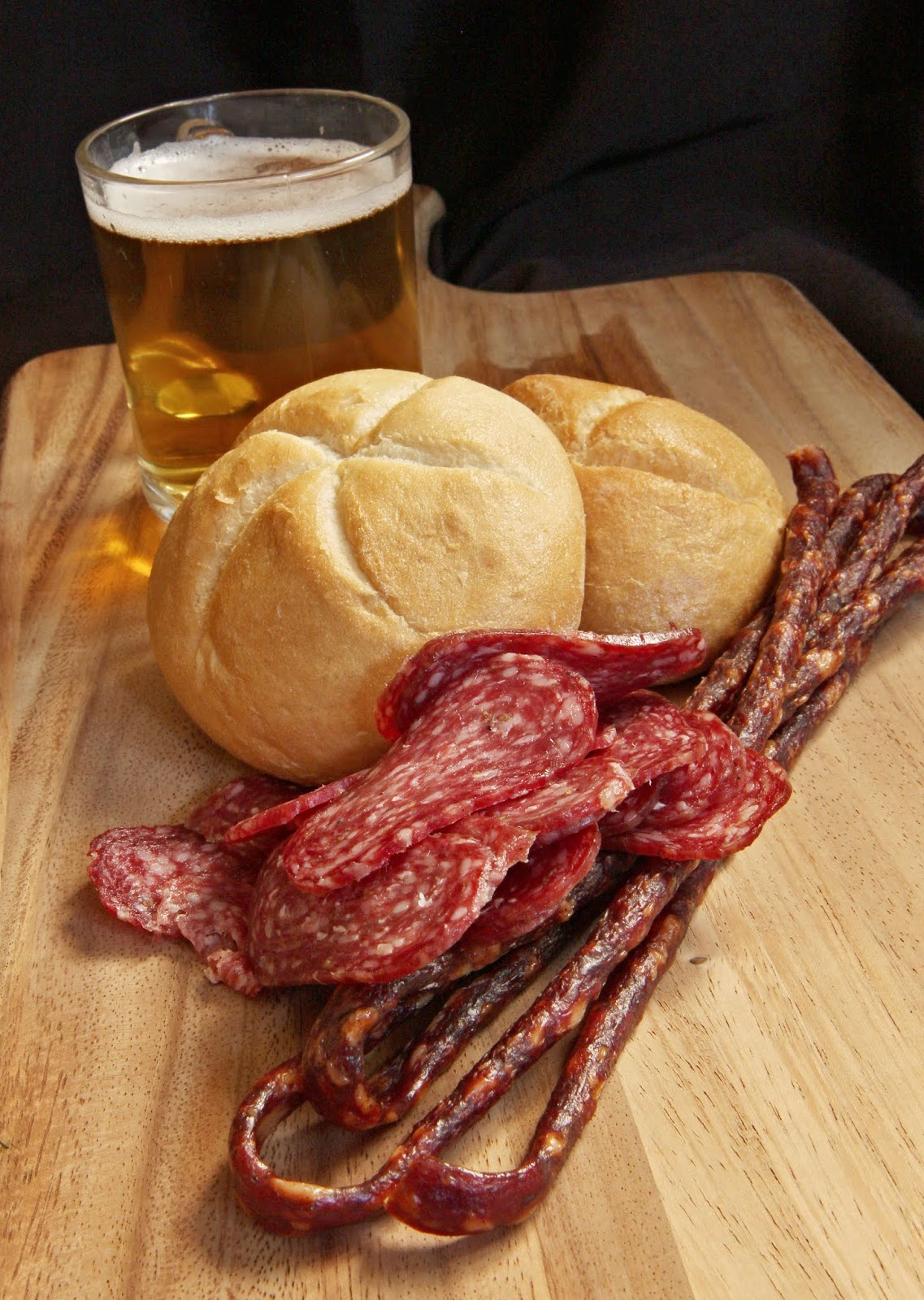
When I took those two, I was quite pleased with the result. They featured both the darkened background and the new idea (in this case, showing the abundance in the whole picture) and I used the natural lighting I am such a fan of. However, the problem in the pic lay in the things i photographed. Beer and this type of bread are by no means traditional or Bulgarian. 

So I went on to photograph something traditional, looking traditional (in my opinion): 


The 'model' was liutenitsa - a traditional Bulgarian appetizer made up of peppers and tomatoes (each family has a recipe of its own). In Bulgaria, we love saying that liutenitsa goes well with anything and we mean it. Some 200 years ago, it was the type of comfy fast food farmer could take out with them in the fields and eat when they have time. It was also a means to preserve produce. 

So, my idea in this image was to recreate a farmer's lunch, the way I thought it would have looked like a few centuries ago. To be honest, I recreated an old shot - this one (here the model is another traditional Balkan appetizer made of peppers and aubergine, called Kiopoolu). 


I was quite pleased with the end result so imagine my dismay as I was told that images like this are no good. To my question why, I was shown an image of a Dutch still life (again!) to see the difference. I can't find the exact image, but here is another one, just for illustration: 


Then it dawned on me what the problem was - my images looked set-up and artificial, made up for the sake of composition. They lacked life and soul. Unlike the Dutch still life paintings that looked so vivid and alive. 

So, the dire question arose - how do I do a 'live' composition of traditional Bulgarian food that would show off my skills as a photographer but still show the food as it is and at the same time incorporate some kind of a personal style ... 

Sources:
http://www.artic.edu/aic/collections/artwork/21682

WIP development - how do you mimic the Dutch masters with artificial lighting and on a budget

Since I already had an idea of how to do my images - the first point was to mimic the Dutch masters - I decided to go for something easy and to try and do something I have never done before. The idea was to use a simple dish - in my case that was Shopska salad (quite a traditional dish on the Balkans, made out of tomatoes, cucumbers, peppers, onion and a lot of white cheese) - and to try and create something that looks like a Dutch still life. 

The setting was created on the living room table since the living room is the darkest one at home. I planned to do something I have never done before - in my case try new style and composition AND use artificial lighting. I am much more used to working with natural light - when I had to take pics for Shutterstock, natural light was the only thing I used. However, the challenge set by Michelle involved me taking some kind of a risk so that I manage to push myself a bit. 

As a start, it turned out that working with artificial lighting may give you all the control but when you have no idea what you want to achieve (apart from some vague image in your head), things can get complicated. So it took me around an hour to figure out what I wanted to depict and a few more minutes to set up the whole thing.

The end result truly looked like nothing I have done before - new type of background (for years, I had been avoiding the dark backgrounds), new type of composition as I tried to mimic the Dutch still life type of compo and a whole new concept of how I should be doing my images. 


I chose the salad and the glass to show a typical farmer's dinner at the local tavern (hence the yellow liquid that is actually mint tea since we had no rakiya at home). Took me a lot of time to figure out how to do the lighting so that the glass is lit from above and I have some kind of tecture (first time working with that light). 

I tried a few angles, such as this one:


Even though I liked the end result, the whole thing looked so different from what I used to create, that it was a bit foreign to me. I did the challenge BUT somehow couldn't feel the image. What was worse, I still lacked some ideas on how to do the rest of the images. 

As my mother exclaimed when I showed her the images - they simply looked dull in some way. Well. the point was to challenge myself and so I did but the overall concept was completely eluding me. 

Thursday, 2 August 2018

WIP development - food photography - an old passion rediscovered

Having selected food photography as my new theme meant that I had to remember how things are done. I started taking pictures of food back in 2014 when I struggled to get accepted as a Shutterstock contributor. It took some time but eventually I managed to become part of the community and started building a portfolio. 

The whole process involved a whole lot of 'photo sessions' of anything that could possibly sell. Problem was that images that used to sell in stock image banks at the time were, as my mother loves putting it, 'lifeless' and 'banal'. Still, that was the style I am used to as I have done it for quite some time. 

The other problem with food is that the Internet is full of food images. Social networks, such as Instagram and Facebook and even Pinterest are full of mouth-watering images. Some of them are done by professionals, some by passionate amateurs. I have a friend like that - she is a passionate Instagrammer and I have to admit she does manage to capture some stunning angles. Here is one image of hers - from our most recent evening out:


There was the rub though - I can create images like that, no doubt BUT what I need for the sake of the project is a signature style. All tutors keep telling me that. But how do you find your signature style? Throughout the years, I have worked out to make my images recognizable (which means that people who are familiar with my work would be likely to point out which of the images they see is done by me and which is not, regardless if they have seen that particular image or not). 

Still, compared to most other people on the MA, I still feel like a total novice, yet to find what is what and that 'signature style thing'. Sometimes, I create something that stands out, at other times, things simply wouldn't work. I've experienced that throughout the previous modules since when I go out to take pictures, I count on my 'gut feeling' of what is good and what is not. 

When it comes to food though, I lack many ideas as to what I can experiment with as I have no professional studio equipment (most of my images are taken using natural light on the table in my bedroom using whatever was at hand as a backdrop). I admire food photographers and I am quite a fan of a few of them. Most of those people are traditionalists, so to say. 

So - what I needed was not only rediscover my passion for food photography BUT also somehow find a style that would suit me somehow...

Monday, 23 April 2018

Work in progress portfolio - the stories behind the images

The time came to share the story behind those places and since I cannot do it in the PDF for submission, I decided to create this post and share the information. 


Name of the place of worship: Sveta Petka Samardzhiiska chucrh
Location: Sofia, Bulgaria
State: in use
Age: 1000+ years

The image above shows a church which barely escaped demolition - Saint Petka Samardzhiiska church. It is a 12th century small church, build on even more ancient remains. In the 1950s when the big Stalinist-style center was built the church was destined to be demolished. The complex, known as the Triangle of Power led to the destruction of the Roman Serdica and the whole layer of the earliest history of  the city. They destroyed a whole street that used to house the trade shops in town (the so-called Targovska street), famous for its Viennese-style architecture AND they demolished the forum of Roman Serdica AND the larger part of the palace of Constantine the Great. If that is not stupidity, I don't know what is. 

So, having destroyed all that, the Comrades, destined the church for demolition too. Until a delegation of government officials and their wives came from Moscow to inspect the new government's work. While the men did their job, the wives entertained themselves. One of these was an art historian and wanted to tour the city in search for frescoes. She found that church and demanded to see it. Even though it was already destined for demolition and locked up, somehow the Bulgarians managed to find the key and open the place, The woman was in awe because the frescoes were unique in the whole of Europe. She asked what the church would be made of, hoping to hear the phrase 'a museum' and was appalled to hear that it was to be demolished. 

She made an effort to preserve the church (talking her husband to press on the Bulgarian Comrades for that) and they somehow bent to the wishes of the wife of the high official. The whole architectural plan was changed and now the church sits in the middle of one of the busiest crossroads in Sofia. All that, thanks to one woman who just loved art...

Otherwise, the history of the place spans across more than 10 centuries because it was built on  the site of an ancient Roman temple. It is dedicated to Saint Petka, who is a Bulgarian saint that lived in the 11th century AD. The Samardzhiiska part of the name refers to the fact that in the Medieval ages the place was used by the guild of the saddlers so Samardzhiiska means of the saddlers

A legend goes that Vasil Levski (a national hero, too long a story to explain all the context here) was buried in the church. There is even a tombstone at one side. Truth is, no one knows where Levski was buried...


Name of the place of worship: Saint George rotunda
Location: Sofia, Bulgaria
State: in use
Age: 1600+ years

It was built in the 4th century AD by the Romans on the remains of other archaeological remains (most of which were destoryed by the Comrades in the 1950s) and is practically one of the oldest churches in Bulgaria that is still in use. It has amazing frescoes and it is deemed one of the most important places of the Serdica Ecumenical Council. All in all, the fate of the Roman empire was determined behind its walls. 

The church has been used for many a thing over the years - both as religious and secular building. During the Ottoman rule, it even functioned as a mosque. 

This church shared the fate of the previous one - it was also destined for demolition. The reason was simple - it was located in the middle of the Presidential complex. The Comrades wanted to destroy it so that the government officials can go to the hotel next door in style (by car, that is). Problem was that this church was just in the way. Moreover, they discovered the palace of Constantine the Great and decided to preserve at least the part that was inside the building. The church, however, was a different story since the new ideology regarded religion as something degrading. 

Here the church was saved by society - it is an example of different styles of iconography and you can see four centuries of frescoes and their development during the centuries along its walls. It is still quoted in art historians' textbooks and history books as a unique example. 

Name of the place of worship: Italian Church of the Most Holy Redeemer
Location: Bucharest, Romania
State: in use
Age: 100+ years

This church also has a dramatic story to tell. It was consecrated in 1916 and is owned by the Italian government. It is a Catholic cathedral that differs drastically from anything else you can see in Bucharest. What is also draws some attention is the surrounding area. Blocks of flats are built so close that you can actually see through the church windows from their balconies.  

The fact that it was owned by a foreign government saved the building from demolition during the huge reconstruction projects of Nicolae Ceaușescu (who was notorious for destroying churches and ) but it could save the priests that worked there and the architects who created it. The priests were imprisoned and the archcitect was forced to leave Romania. 

The church remained closed up till 1968 when the government opened it for a while for the most important Christian holidays such as Easter and Christmas. It has been in use ever since. 

Name of the place of worship: Cathedral of St Joseph
Location: Sofia, Bulgaria
State: in use
Age: less than 15 years (current building)

One of the newest places of worship in Sofia, this Catholic cathedral (commonly known as the cathedral by the locals) was built on the same spot where the old Catholic cathedral used to be before the bombings of WWII. The foundation stone was laid by  Pope John Paul II during his visit to Bulgaria in 2002 and now there is a full-size monument depicting the Pope in front of the Cathedral. 

Its futuristic design sets it aside from most of the other places in my project but since it is such an important landmark (and the only Catholic cathedral in Sofia), I decided to include it. 

Just as the previous churches in Sofia, this one was also built on ancient remains as some of the Roman Serdica can be seen in the yard. 
Name of the place of worship: Banya Bashi Mosque
Location: Sofia, Bulgaria
State: in use
Age: 500+ years

The only mosque in Sofia that looks like a mosque, Banya Bashi is one of the most spectacular buildings in the centre of Sofia. Together with the rotunda, the cathedral and the synagogue down the street it forms to so-called Rectangle of Tolerance where you see places of worship of four different religions and no one offends the others. 

As with anything in the Sofia city centre, this place of worship stands on Roman remains, some of them still visible at the back yard. Below the mosque lies the stratum of Roman Serdica that was excavated a few years ago during the underground system construction works so the biggest underground station is literally five meters away from its entrance. 

The mosque was built by the famous Ottoman architect Mimar Sinan in the 16th century and was once surrounded by huge baths (which gave the name to the mosque and were demolished in the beginning of the 20th century when the whole area was rebuilt). The story of the mosque resembles that of Taj Mahal because it was built in loving memory of a diseased wife of the local Ottoman ruler. 

That mosque somehow managed to survive though wars, bombings, numerous earthquakes and what not. It is still in use so during prayer time (especially on Fridays) the space around it is packed with worshipers (which was one of the reasons I couldn't take pictures of it during night time). 
Name of the place of worship: The Great Mahmud Pasha Mosque
Location: Sofia, Bulgaria
State: not in use, now housing the National Archaeological institute
Age: 600+ years

One of the biggest used-to-be mosques in Sofia that was not as fortunate as the previous one. It was used for many things during the years: a library, a military hospital and finally - a museum. 

Legend has it that when the Liberation of Bulgaria became a fact (in 1878) most mosques in Sofia were either demolished or turned into churches - the same way Ottomans turned churches into mosques 500 years earler. 

This mosque, however, was too big to be demolished. Another mosque in Sofia had already been turned into a dungeon (called the Black mosque, now a church) and city jail so this one was destined to be a theater. At the time, Sofia had no theater so this seemed like a good idea, especially given the location of the place - in the ideal center. 

What saved the place was the speech of the Bulgarian Patriarch who gave an angry speech in front of all National Assembly members, stating that 'I will not turn a temple of God into a den of sin'. So, once excavations around Bulgaria were carried out, the place became the storehouse of the findings. Naturally, it was turned into a museum at the end of the 19th century.

Name of the place of worship: Saint Alexander Nevski Cathedral
Location: Sofia, Bulgaria
State: in use
Age: 150+ years

One of the most imposing buildings in Bulgaria and one of the symbols of Sofia, Saint Alexander Nevski church was built around the end of the 19th century. Paradoxically, one of the most famous place of worship in Bulgaria is dedicated to a Russian kniaz and warrior. The architecture is a cross breed between that of Hagia Sophia in Istanbul and that of traditional Russian churches. It is one of the biggest churches in Bulgaria and the place where the Patriarch announces the birth and resurrection of Christ. BUT it wasn't always as venerated. 

In the 19th century it was built on donations by the grateful Bulgarian people and was a masterpiece of architecture. Some of the bells weigh up to 10+ tons and the whole complex houses several thousand people during festivities. 

At the beginning of the 20th century, the church was hated for the Russian saint that was its patron. The reason were the political problems and numerous wars Bulgaria took part in. It even had its name changed because of this. During World War II. it was bombed because of its golden domes. The gold was a gift from Russia (15 years ago, when the domes had to be restored, the Russian church again donated 10 kilograms of gold for the restoration) but also a target for Western pilots. They were told to bomb yellow domes and yellow pavements. Paradoxically, the church is in the middle of the city center, all paved in yellow tiles, famous for their durability and beauty. 

Today, the church is one of the most famous places in Bulgaria and the mark of the ideal center of Sofia. The area around it, though, is quite secular - since it doubles as a concert space and public parking.


Name of the place of worship: Holy Trinity Romanian church
Location: Sofia, Bulgaria
State: in use
Age: 100+ years

The Romanian church in Sofia is one of the hidden gems of the city. It is located on a quiet street, not far away from the other religious buildings in the complex. It is included here because it differs significantly from the Romanian churches in Bucharest. 

It was built by the Romanian government for the Romanian congregation and was severely damaged by the WWII bombings and was restored in the 1950s. Now it is owned by the Romanian state. 


Name of the place of worship: Kretzulescu Church
Location: Bucharest, Romania
State: in use
Age: 250+ years 

One of the strangest structures in Bucharest and strangely eerie place. It was destined for demolition in the 1960 but was saved by the efforts of local architects. The church had been damaged during several earthquakes so the exterior (which used to be richly painted with frescoes) was changed to bricks. 

The bust on the right belongs to a Romanian politician that was a devout Christian and in strict opposition to the Communist regime. 

Name of the place of worship: Saint Dumitru Church
Location: Bucharest, Romania
State: in use
Age: 150+ years (current building)

The old church with the same name was built at the same place in the 16th century but was destroyed by a fire in the 19th century so the new building was consecrated shortly after that. It is dedicated to Saint Dimitru, the patron saint of Bucharest. It is located right behind the old Post office in the old town and is famous for its richly decorated interior. 

Name of the place of worship: Curtea Veche church of Saint Anton
Location: Bucharest, Romania
State: in use
Age: 500+ years

This is the oldest church in Bucharest, build by one of the first Romanian kings in the 16th century. It was once part of a huge palatial complex that existed on the place of the Old town of Bucharest. 

During the past two centuries, coronation ceremonials of the Romanian kings were held there. Today it is still one of the must-see sights of Bucharest and one of the most holy churches in the area. 

Name of the place of worship:  Stavropoleos Monastery church
Location: Bucharest, Romania
State: in use
Age: 250+ years

This small nunnery is one of the most famous places of worship in the whole of Bucharest. It was built by one of the Princes of Wallachia in the 18th century and used to be sustained solely by the inn it owned. Today, the only thing that stands from the original monastery, amidst the restaurants and bars of the Old town, is this little church with its amazing frescoes.
It is still in use and you can go in and listen to a mesmerizing choir during the service. Monks and nuns take it in turns to sing psalms (in Romanian so I couldn't make much of what they sang) and the feeling once inside the monastery - as if you have been transported back in time.  
Name of the place of worship: Saint Nicholas the Miracle-Maker church
Location: Sofia, Bulgaria
State: in use
Age: 200+ years 

This church was built in the place of a mosque that was demolished towards the end of the 19th century. This was one of the few churches that was open for all worshipers at all times (even during the Communist regime). Unlike other churches, where only old women were let in (technically anyone could come inside but younger people used to be scolded for lighting candles and so on), here anyone could come, but everyone was watched by the state secret police. 

This is one of the most beautiful churches in Sofia and one of the landmarks of the city. Now it is located in a very busy (and fancy hence expensive) area, as you can see from the image (a reflection in a restaurant window). 

Guardian of the past

Or what happens when you decide to edit an archive shot with the idea of showing that you are a better editor than your pervious...