Showing posts with label food. Show all posts

Friday, 24 August 2018

WIP development - the deconstructed Bulgarian food

Bulgarian food is amazing - tasty and delicious, made from fresh produce off the land. Most ingredients are locally grown for centuries and the recipes are immensely popular. Most Bulgarians can recognize at once many recipes, if shown a picture.

For the sake of my project though, I had to go on and deconstruct the images of food I have seen. I didn't need the glossy image worth of a restaurant menu. That would have made my project dull and mundane. I needed something more to stand out and throughout the module both tutors and fellow students was to experiment and come up with something interesting and novel. 

For the better part of the module, I simply failed to figure out how to do that. Everything I seemed to do looked uninteresting and I didn't feel the images as mine or worth sharing to the world. It was so until I saw Irving Penn's work and was fascinated by his ideas of deconstructing the images of food. His images made me stop in my tracks, think, look again and then think again. I was fascinated by the way he managed to deconstruct food and traditional cuisine types in creating imagery that is both striking and amazing to look at. 

Then it dawned on me that even though Irving Penn is extremely popular in the West, in Eastern Europe more elaborate and not so novel compositions are much more valued - some serene picture showing a still life of the cooked dish. No one had dared to try out Penn's approach. At least no one in Bulgaria. Most other images I have seen and most colleagues that do food photography try to be on the safe side and have more naturalistic saliva-inducing images.

No one has dared to try and see if Balkan food can be deconstructed. Maybe that person was me. But how do you deconstruct an image of a dish. In this approach, I am familiar with it because of my training as a specialist in  English and American studies, the idea is not to show the whole but the unexpected parts it is made of. Hence the deconstruction idea. Dishes are organic whole once cooked. So the only two ideas that I could use to deconstruct them is to show a dish either before it is made or just after it is eaten. Penn made a great use of both approaches while he worked for Vogue. 

Somehow (due to health issues too) I found the 'before' approach much more appealing and settled for showing the food before it is cooked which meant - taking creative images of the ingredients a dish is made of - preferably the uncooked, unpeeled and non-processed ingredients. The contrast with the traditional images I am used to taking was striking (as you can see below with the two versions of one and the same dish - the traditional version - image taken a few years ago and the deconstructed one) and I will keep using this style throughout the Culture Crossroads project work. I can even see images like that hanging on the walls of bars or restaurants. 


WIP development - how a sudden turn of health shifts project scope

When I started the module, my first idea was to create still-life images of food, similar to those created by the Dutch masters a few hundred years ago. The whole point was that I wanted to create an image that would not only show the recipe and the dish but also its cultural context. For that thing I needed some props and even planned to go an buy some things I lacked from a local souvenir store. However, my initial attempts proved out to be 'soul-less' as I discovered during one of the webinars. Technically they were OK but in terms of emotion and connection to the cultural context, they looked set-up and dull. Here is a perfect example: 


I later thought to use popular Bulgarian paintings for the basis of each image set up - there are a lot of painters who throughout the past two centuries started to document the rural life of Bulgarian peasants. However, that plan also failed since I needed a lot of props for the creation of such imagery.

To top it all, a few weeks before the hand-in date I got some kind of stomach flu. As a result, I was unable to eat or smell food and spent several days in bed on antibiotics being only able to sleep for prolonged periods of time. As the hand-in date approached, it dawned on me that I will not be able to carry out my initial plan to shoot still life images of cooked food. The first and obvious reason was because I couldn't stand the smell or appearance of food as it made me feel sick. The other was that I was running out of time to come up with amazing compositions OR cook that much food.

So I settled for taking pictures not of the cooked food but rather the ingredients used to cook it. Raw ingredients didn't make me that sick and what was even better - the compositions looked much more interesting (being heavily influenced on Irving Penn's works for Vogue) than my initial ideas.

Hence, that sudden illness proved out to be 'a blessing in disguise' as Michelle put it in out one to one session since it enabled me to unleash my creative potential and experiment - something I would have avoided if I was in shape.

This is my favourite image from the series (quite the shift in style compared to the previous one):


Marketing - looking for means to get money

Traveling is a costly business and the more I develop my project, the more it dawns on me that I will need more money to run it. So far, I use any opportunity to travel and store more images but that costs quite a lot. On the other hand, even as experienced as I am in promoting my work and using free tools to create content, paying for some services - such as a private domain for my website and some Facebook promotion for my most interesting posts as well as participation in photo contests with participation fee would enable me to reach out to more people. 

The first thing a friend told me was to set up a bank account and hand it around to wealthy people who could be potential sponsors at meetings. To do this, I need to create new business cards for my project (the logo is already created). 

Another thing I am considering is to add a PayPal donate button to my page, website and blog so that people can donate to keep the project going. I am also trying to get a job so that I can keep working on my project. 

Recently, I discovered the Patreon platform and have set up a page there so that people notice me and maybe donate some money to my cause. Here is a screen grab of how it would look like when published. 

I am holding the launch since it is vacation time and few people will notice it. Otherwise the page is approved by the admins. Another thing I plan is to record a welcome video for the page, describing my project and its aims and haven't made up my mind yet on what I want to put in that video. Hence, the Patreon launch will have to wait up till mid September. 

Another thing that would happen in mid September is that I have an arranged meeting with a lady that is interested in helping me out popularize the project. Will see how all these will turn out. 

Project development - using all opportunities to create imagery - a trip to Macedonia

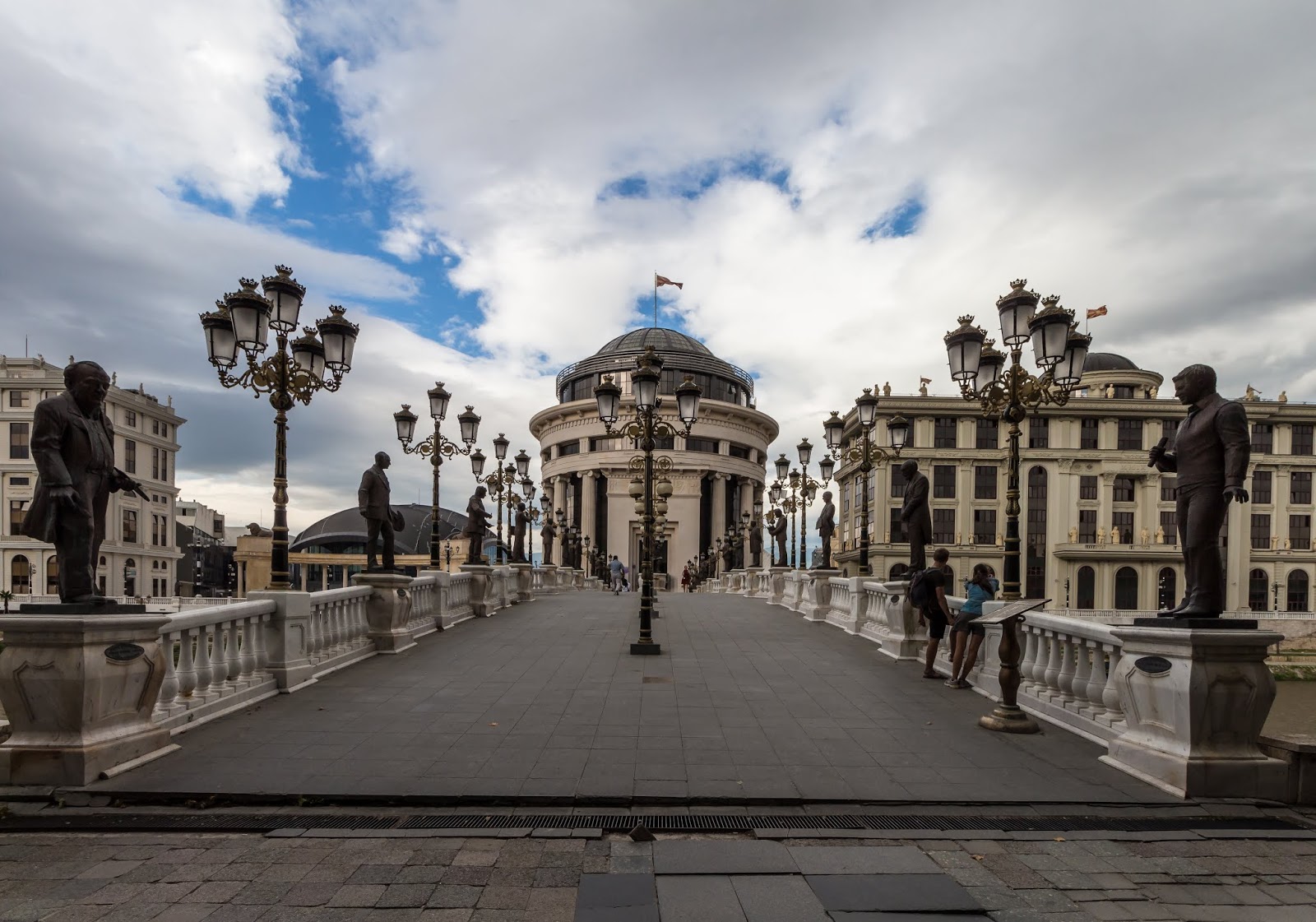
A few weeks ago, at the end of July, I got admitted to a conference in Macedonia. The conference was for students of Classics but me studying Cultural Studies made it possible for me to participate. It was to be held in Skopje and since I had never been there, took the opportunity to add more images to include Macedonia in my project. Hence, I took the photo bag with me and spent most of the free time I had roaming the streets of the Macedonian capital, documenting the grand construction sites around the Vardar river. 

My presentation was about the influence Latin had on the development of English - quite a huge topic for a short presentation but things worked out very well. Here is a pic of me presenting and the other one was the memo picture we took at the end of the conference (I am kneeling in the front row). 


Skopje turned out to be an amazing town for photography - new buildings, beautiful river and diverse locations to choose from. Here are some of the amazing places one can see - the one being one of those new buildings along the river bank and the other - the city fortress which towers above Skopje. 


I managed to learn quite a few things about the Macedonians and their capital (which are to be published in a travelogue soon) and I definitely plan on returning to Macedonia at a later stage of the project. 

Critical contextualization of my work - inspiration talk - food stylists close to home

Speaking of food, I am in love with cooking, eating and photographing it. What is more, I have a few favourite authors that I have looked up to though the years. Naturally, some of them are Bulgarian or from Eastern Europe and do a lot of images that are close to my style of work or (in most cases) they do something I dream of creating.

When I selected the topic of food photography for this module, the first thing that came to my mind was the work of Eva Toneva. She is an amazing food stylist and cook from Bulgaria and I have been in love with her work for more than 8 years, ever since the day my mother discovered her website while looking for a recipe on the net.

Eva Toneva's work makes my mouth water each time I look at her images. A few weeks ago, while doing another assignment, I came across her website once again and was stunned by her technique.

Technically her images are very good and she works in her own studio, using mostly artificial light - something I would love to learn myself. I love the way she manages to show dishes as they are - beautiful and tasty and still keep her own signature style. Her images are recognizable and interesting and make the viewer want to cook the dish. I want my food images to have the same qualities since the purpose of the Culture Crossroads project is to promote Balkan culture. 

Fig. 1 – Liutika - TONEVA, Eva - 2016
So far, so good, but during some of the webinars both tutors and students noticed that even though Eva Toneva is a great artist, what she does in not that unique. Her images are amazing and I love them very much - would like to be able to take images like this. However, they are not that unique in terms of how the content is displayed. If one searches in Google, one can find hundreds of images that look almost identical. Eva Toneva may have a signature style, that is true BUT her style is not that distinct if multiple food images are placed side by side. 

So, I needed something better and more creative if I wanted my project to stand out. This, of course, would not mean that I would stop creating images like the two I selected here - on the contrary, I would love to be able to make the viewer want to taste the dish since I aim at popularizing food and culture. To do that, I need something more than the plain stock images I am used to creating. 

What is more, a distinctive style would make me easily recognizable and attract more attention to my project. Images like the ones Eva Toneva makes would be present in my portfolio and will serve as illustrations to the recipes, that is for sure. But they cannot be the main focus. 

I adore Eva Toneva's natural-looking images. as if she has taken a snapshot of her plate or her table, luring the viewer to reach and take a bite. I love her mastery to show different textures and forms, as well as colours and flavours (see the image below). Her lighting skills are also a thing to admire. To be unique though, I would need something more. 

Fig. 2 – Pasta alla Norma - TONEVA, Eva - 2018
List of figures:

Figure 1 – TONEVA, Eva - Liutika – 2016
Available at: http://www.evatoneva.com/index.php?option=com_content&view=article&id=898:chutney&catid=2:osnovniiastia&Itemid=4 [accessed 24 August  2018]

Figure 2 – TONEVA,Eva – Pasta alla Norma – 2018 Available at:http://www.evatoneva.com/index.php?option=com_content&view=section&id=1 [accessed 24 August  2018]


References:
http://www.evatoneva.com [accessed 24 August 2018] – Eva Toneva’s website

Project development - audience

To be honest, when I started the Culture Crossroads project, I thought I would have more viewers. It turned out, however, that people are not really keen on subscribing to something they do not know and even though I have 1200+ friends on Facebook and around the same amount of followers on my photographic page in the same social network, with Culture Crossroads I struggled to get even as many as 200 followers. This is how my Facebook page currently looks - even though I try to post original content and be engaging. 

I also noticed that my primary audience is on social media (not on my website and blog) and consists of young people who love to travel. The age range is roughly 18 to 45 years old and most of these people have interests similar to mine - cultural tourism is one example. Another thing I noticed that after passing the 200 like threshold that people have formed some sound fan base - they comment share and like my posts as soon as I post them and share the page with others too. So my fans are growing but very slowly and at first I was a bit disappointed by that. Having in mind my previous experience from my photographic page I know that once you pass 300 likes, fans accumulate more quickly and I will keep being active so that people get to notice me. I also make sure to tag my page as much as I can so that those followers who have missed my invite to like the page go and follow me.

Interestingly enough, without having done much on Instagram, people have liked and followed me just as much:


The only thing I cam do at this stage is to keep being active on social media to keep my current fan base and attract new people. I also plan to start using paid promotions at a later stage to be able to reach more people and to start showcasing my work in online curated galleries. 

Landings 2018 - showcasing work

Landings is an online event so I had to come up with a way to showcase my work. Having a dire experience in trying to set something up in wordpress in module 1, the first idea that came to my mind was to set up a blog. Then I decided that a blog would not look right alongside the work of all other colleagues who had taken a lot of time to think over their ideas and select the best one. I had to work quickly since I was late already so I resorted to something I am comfortable with.

Since these days I had to do a lot on my personal website and the Culture Crossroads project site, my first idea was to create one for Landings, too. Building a webiste once you have an idea what you want to do is quite easy and here is the way that site look like now. I wanted something plain and easy to navigate.

This is how the home page looks like and the link to the site is below.

https://bistrastoimenova.wixsite.com/landings2018

The downside of having to use the free version of a website builder is that the site has no mobile version and there are ads displayed at the top of the page. That was quite the unpleasant surprise but since all my sites are done with this same website builder, I would probably buy a subscription plan at a later stage (and that would remove the ads from all sites). 

Another thing I did to showcase my work was to share the exhibition materials all over my social media platforms so that people know it is there. I also shared the website link. Another strategy I plan to use is to share each image from the exhibition and the story behind it. That takes a bit more time, however, so I'll do this one at a time (hoping to attract more people even after the exhibition is over).  

Landings 2018 - selecting a theme

Since I was a latecomer to Landings, I virtually had no time to think or create new content for it. So, of all topics available, I decided on using work i have created using some work I have created already.

I chose Expressions of Consequence since when I posted that image on social media, it attracted quite a lot of attention - the place is amazing but the consequence of the neglect is that you can only marvel at it through the fence as access to the insides is denied. 

For Landings 2018, I chose to focus on the Expressions of Consequence  theme since most of the work I have done during the past module. In module 2, I chose to focus on crumbling urban architecture, mostly from the 20th century but not only. That is how the Beyond the Postcard mini project was born - showing the fate of beautiful abandoned buildings across the Balkans.

The whole idea was to document abandoned places around the Balkans and this one is maybe the best of them in terms of story.

The stories are many but maybe the most striking is that of the cover image. This house belonged to one of the richest people in Bulgaria - a wealthy banker - and  was known as 'the house with the strawberries' because of the decorative strawberries in the front yard. Throughout the years it has been a lot of things, even a movie set in the 1990s. However, after 1989, the house was sold and the new owner left it to rot. This is generally illegal since the place is a monument BUT if the place crumbles, the space can be used to build an office building which can bring much money. 

​With the work featured in Beyond the Postcard, I want to draw attention to what normal tourists rarely see and that each picture-perfect place has two faces - one good and one no one sees, except the locals. Crumbling buildings are often historical monuments - places where famous people lived and loved. They should be preserved instead of being demolished or left to rot. 

People rarely notice such buildings. However, once a picture of the place is shared on social media. it immediately becomes extremely popular and noticed. 

Friday, 3 August 2018

Project development - Balkan food - the gastronomical crossroads of Eastern Europe

Choosing food photography and integrating it into my project meant that I will be photographing something different from spaghetti and French fries. The good news was that the Balkans are maybe one of the richest places in terms of local cuisine. 

Throughout the centuries, cuisine was layered on the Balkans. First the Romans, then the barbarian tribes during the Great movement of peoples, then the crusaders, then the Ottoman turks. Combining this with the versatile climate on the Balkans - having a lot of sea and wide rivers providing for sea food and fish, mountains which can supply people with game and fresh meat (if they raise cattle), plains that would yield vegetables, fruit and grains and a lot of spices that naturally grow in the area, i can proudly say that the Balkans are one of the best places to have a treat. 

Mixing of the Mediterranean diet of the southern Balkan states and that of the ones further inland with the nomadic cuisine of the Ottoman turks led to a unique mix of flavours that cannot be tasted anywhere else. 

Co-existence for centuries led to another particularity - that most Balkan countires have similar recipes. Here is a quick example: 

The Bulgarian 'Shopska salata' which is a simple salad made out of cucumbers, tomatoes, white cheese, onion and peppers is not actually Bulgarian (here is a pic in case you don't remember how that looks like):


The recipe was invented in the mid 20th century when the national tourist operator, Balkanturist, had to come up with something with the coulours of the Bulgarian national flag and to make it easy to consume and remember. A quick research I had to do for my Cultural Studies BA showed that Shopska salata derives from two other Balkan salads - the Serbian salad and the Greek horiatiki that have the same ingredients. 

The recipe became so popular that some years ago it wa declared the most popular recipe in Europe. Still, even though it is famous as a Bulgarian dish, the recipe is much older and should rightly be deemed 'Balkan'. 

Same goes for other 'traditional Bulgarian dishes' such as the famous banitsa (another Bulgarian favourite): 


It is a traditional dish made of eggs and cheese wrapped in filo pastry. However, this thing has direct relatives in all Balkan countires - the Greek pita and the börek varieties that exists all over the Balkans are the most famous among them. The pic above shows a traditional Bulgarian breakfast on a Sunday morning - banitsa and ayran (another favorite basically yogurt, water and salt). 

So, speaking of recipes, I would rather go for Balkan recipes, not Bulgarian, since it takes a whole research to trace back the origin of each recipe. Still, there are a lot of tasty treats available so I had a wide variety to choose from. 


WIP development - when you food images lack soul

I had no idea what was wrong with my previous images - from the challenge - but somehow sensed that something is not quite right. Honestly speaking, the darkened background was something I was not used to and was quite foreign to me. It may have worked for the Dutch masters BUT to me it looked strange. 

So, for the next webinar, I decided to create something that is much closer to what I am used to doing. Frankly speaking, I had no time to use the artificial light so I went for my tried and tested method. The backdrop was sort-of-traditional Bulgarian rug and the food was whatever was available at home at the time. 


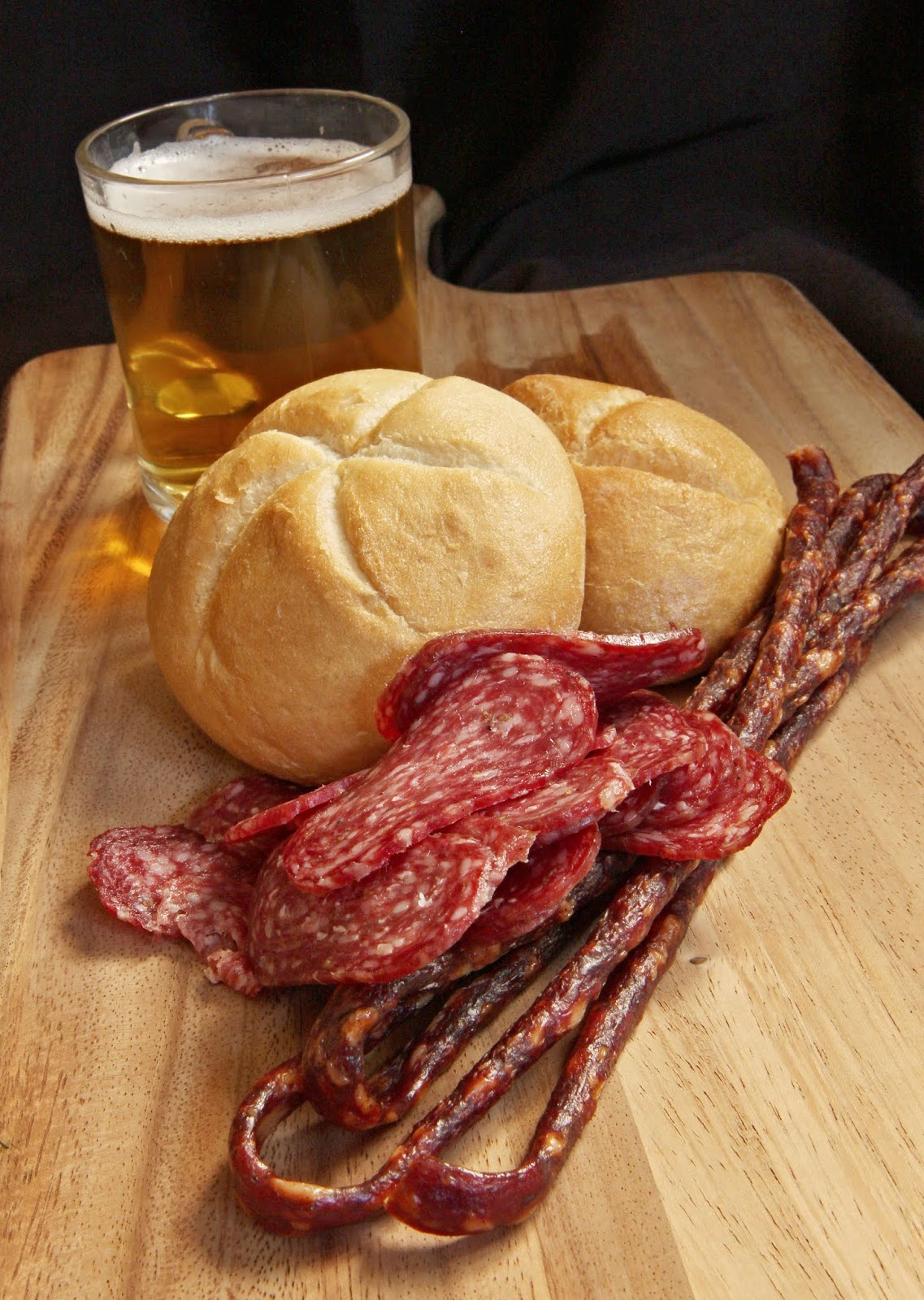
When I took those two, I was quite pleased with the result. They featured both the darkened background and the new idea (in this case, showing the abundance in the whole picture) and I used the natural lighting I am such a fan of. However, the problem in the pic lay in the things i photographed. Beer and this type of bread are by no means traditional or Bulgarian. 

So I went on to photograph something traditional, looking traditional (in my opinion): 


The 'model' was liutenitsa - a traditional Bulgarian appetizer made up of peppers and tomatoes (each family has a recipe of its own). In Bulgaria, we love saying that liutenitsa goes well with anything and we mean it. Some 200 years ago, it was the type of comfy fast food farmer could take out with them in the fields and eat when they have time. It was also a means to preserve produce. 

So, my idea in this image was to recreate a farmer's lunch, the way I thought it would have looked like a few centuries ago. To be honest, I recreated an old shot - this one (here the model is another traditional Balkan appetizer made of peppers and aubergine, called Kiopoolu). 


I was quite pleased with the end result so imagine my dismay as I was told that images like this are no good. To my question why, I was shown an image of a Dutch still life (again!) to see the difference. I can't find the exact image, but here is another one, just for illustration: 


Then it dawned on me what the problem was - my images looked set-up and artificial, made up for the sake of composition. They lacked life and soul. Unlike the Dutch still life paintings that looked so vivid and alive. 

So, the dire question arose - how do I do a 'live' composition of traditional Bulgarian food that would show off my skills as a photographer but still show the food as it is and at the same time incorporate some kind of a personal style ... 

Sources:
http://www.artic.edu/aic/collections/artwork/21682

WIP development - how do you mimic the Dutch masters with artificial lighting and on a budget

Since I already had an idea of how to do my images - the first point was to mimic the Dutch masters - I decided to go for something easy and to try and do something I have never done before. The idea was to use a simple dish - in my case that was Shopska salad (quite a traditional dish on the Balkans, made out of tomatoes, cucumbers, peppers, onion and a lot of white cheese) - and to try and create something that looks like a Dutch still life. 

The setting was created on the living room table since the living room is the darkest one at home. I planned to do something I have never done before - in my case try new style and composition AND use artificial lighting. I am much more used to working with natural light - when I had to take pics for Shutterstock, natural light was the only thing I used. However, the challenge set by Michelle involved me taking some kind of a risk so that I manage to push myself a bit. 

As a start, it turned out that working with artificial lighting may give you all the control but when you have no idea what you want to achieve (apart from some vague image in your head), things can get complicated. So it took me around an hour to figure out what I wanted to depict and a few more minutes to set up the whole thing.

The end result truly looked like nothing I have done before - new type of background (for years, I had been avoiding the dark backgrounds), new type of composition as I tried to mimic the Dutch still life type of compo and a whole new concept of how I should be doing my images. 


I chose the salad and the glass to show a typical farmer's dinner at the local tavern (hence the yellow liquid that is actually mint tea since we had no rakiya at home). Took me a lot of time to figure out how to do the lighting so that the glass is lit from above and I have some kind of tecture (first time working with that light). 

I tried a few angles, such as this one:


Even though I liked the end result, the whole thing looked so different from what I used to create, that it was a bit foreign to me. I did the challenge BUT somehow couldn't feel the image. What was worse, I still lacked some ideas on how to do the rest of the images. 

As my mother exclaimed when I showed her the images - they simply looked dull in some way. Well. the point was to challenge myself and so I did but the overall concept was completely eluding me. 

Project development - some research on the history of still life (part 1)

In order to do decent images of food, one needs to look at how actually images of food are done. Since my only experience was taking pics of food for stock sites (and social networks) I needed to look up someone artsier than I am. One of the first ideas, of course, was the first-ever 'images' of food produced which meant delving back into the mists and dust of time. And I happen to be quite the fan of history so that was an easy task...

A quick research showed that one of the first to create images of food were the Ancient Romans - images of food and tasty morsels are found on the walls of the cauponae (taverns) in Pompeii. These used to serve as a menu for the guests so that, even if they knew very little Latin, they could simply point out at the picture. Images of half-eaten food were very popular floor mosaics in the houses of the rich at that time. It was believed that if the floor is littered with images of food, the feast would go even smoother and better. 


This fresco (fig. 1 above) came from the house of Julia Felice in Pompeii and it is quite naturalistic. The scene is quite simple and depicts what the painter saw.


However, this ancient technique was much like the modern fast food menus where you get exactly what you see on the picture. Hence, this type of imagery was not exactly the 'artsy' and 'signature style' approach I needed. So I did a 'rewind' up till the 16th century. When a new style of depicting food emerged and with it - a new school of painting - that of the Dutch masters. They are universally known as being the first to depict food as it is and yet express much more - feelings of nostalgia, of togetherness etc. This sounded much more appealing to me.

A quick research showed that one of the first to create images of food were the Ancient Romans - images of food and tasty morsels are found on the walls of the cauponae (taverns) in Pompeii. These used to serve as a menu for the guests so that, even if they knew very little Latin, they could simply point out at the picture. Images of half-eaten food were very popular floor mosaics in the houses of the rich at that time. It was believed that if the floor is littered with images of food, the feast would go even smoother and better. 

The fresco above is also from Pompeii and depicts bread and figs and looks much more like something drawn to either attract attention to whatever was on offer at the store or stall.

However, this ancient technique was much like the modern fast food menus where you get exactly what you see on the picture.

Another amazing mosaic this time, again from Pompeii that looks much more like something to be pointed out by clients than like an artistic expression.

Hence, this type of imagery was not exactly the 'artsy' and 'signature style' approach I needed. So I did a 'rewind' up till the 16th century. When a new style of depicting food emerged and with it - a new school of painting - that of the Dutch masters. They are universally known as being the first to depict food as it is and yet express much more - feelings of nostalgia, of togetherness etc. This sounded much more appealing to me. Once again my Cultural Studies and my love for history to be put to the test

The Dutch masters, my research showed, started developing their art when a huge swing in trade routes made the Netherlands the trade center of Western Europe. At the time - throughout the 15th and 16th century - the people there were experiencing a huge boom in terms of living standards, access to new goods and new exotic food. So the first modern 'still life' images of food were created in order to show the abundance of new things that have come to their shores.


The first still life above (done by Kevin Best in the 20th century in an attempt to mimic the Dutch masters) showed the abundance of new exotic goods - basically, food was piled up on a table and depicted as it was -  oysters, crab, even the lemon could be deemed exotic and expensive.  As time passed, new techniques appeared and the still life paintings changed in style. New ideas appeared and the Dutch masters started depicting much more lively scenes - as if the people had just left the table:


The image above, done by Pieter Claesz in the 17th century is part of this trend.

So far I had some ideas of what I should be doing. Another matter was how to do it.

Sources:
http://www.softwaredidattico.it/EducazioneAlimentare/ipsia_enrico_berlinguer/images/affresco_tavola.jpg
http://bodegonesdecocina.blogspot.com/2011/09/antecedentes-del-bodegon-roma.html
http://www.pinsdaddy.com/ancient-greece-slaves-eating_bcAC%7C45qQOG3r4mEeHnO9QGr8g2sXbzYD9syeVW1vK0/
https://www.repro-tableaux.com/a/pieter-claesz/nature-morte-avec-le-pois.html
https://www.liveinternet.ru/users/andre_art/post265064794/


Thursday, 2 August 2018

WIP development - food photography - an old passion rediscovered

Having selected food photography as my new theme meant that I had to remember how things are done. I started taking pictures of food back in 2014 when I struggled to get accepted as a Shutterstock contributor. It took some time but eventually I managed to become part of the community and started building a portfolio. 

The whole process involved a whole lot of 'photo sessions' of anything that could possibly sell. Problem was that images that used to sell in stock image banks at the time were, as my mother loves putting it, 'lifeless' and 'banal'. Still, that was the style I am used to as I have done it for quite some time. 

The other problem with food is that the Internet is full of food images. Social networks, such as Instagram and Facebook and even Pinterest are full of mouth-watering images. Some of them are done by professionals, some by passionate amateurs. I have a friend like that - she is a passionate Instagrammer and I have to admit she does manage to capture some stunning angles. Here is one image of hers - from our most recent evening out:


There was the rub though - I can create images like that, no doubt BUT what I need for the sake of the project is a signature style. All tutors keep telling me that. But how do you find your signature style? Throughout the years, I have worked out to make my images recognizable (which means that people who are familiar with my work would be likely to point out which of the images they see is done by me and which is not, regardless if they have seen that particular image or not). 

Still, compared to most other people on the MA, I still feel like a total novice, yet to find what is what and that 'signature style thing'. Sometimes, I create something that stands out, at other times, things simply wouldn't work. I've experienced that throughout the previous modules since when I go out to take pictures, I count on my 'gut feeling' of what is good and what is not. 

When it comes to food though, I lack many ideas as to what I can experiment with as I have no professional studio equipment (most of my images are taken using natural light on the table in my bedroom using whatever was at hand as a backdrop). I admire food photographers and I am quite a fan of a few of them. Most of those people are traditionalists, so to say. 

So - what I needed was not only rediscover my passion for food photography BUT also somehow find a style that would suit me somehow...

Project development - struggles with scope - how GDPR changed everything

This module posed some new challenges for me. Unlike last module when I had a clear idea of what I wanted to do from the very beginning, this time I was in two minds. The two options I couldn't decide between were street and food photography. 

Both genres are to be incorporated into the Culture Crossroads project so I decided that it was high time I worked more on that aspect of the project. During the past few modules, I focused much more on architecture and history and a bit of landscape photography but had virtually no time for street and food photography.

Naturally, a culture is the sum total of both history, architecture, cuisine and mentality (along with the customs, traditions and rituals that go with it) so my first choice of a topic was street photography. 

Truth be told, I am not a street photographer and cannot say I am good at it. Most of the street photographs I have are accidental shots of people, stolen moments that I noticed around me. Paradoxically, I have never intentionally gone out to take street shots. One of the reasons is that I am too shy, I think, to approach people and have their picture taken.

The image above is one of the first-ever street images I have taken. This girl was just sitting next to me at the bus stop, waiting for the vehicle to arrive. I used my phone, to avoid being noticed. The quality is really poor but I loved her colourful bracelets.


Another image I took by accident, just because I had a compact camera with me and the mother and child didn't see me. Still, with the GDPR as it was initially released, I wouldn't be able to capture moments like that without permission.


This image was just a coincidence - I came to take pics of the building but then I saw this man. This place is known as the Bulgarian 'wall of weeping' since it used to be the place where university admission exam results were displayed. 20 years ago, you had only one shot per year which meant that you can choose to apply to only one university (if you were a girl) or to the university and military academy (if you were a boy). If they didn't accept you, you had to work for a whole year before being eligible to apply again. So, naturally, this place has seen a lot of tears, hence the name. Today, examination results are still displayed here BUT very few people go since there is an electronic system where you can check your results online. This man, though, had come here to see the results in person and he wasn't very pleased. I had a few seconds to capture this moment and I wasn't even looking for something like that.

Usually, I find the most interesting street shots, when I am not looking for them - like the two examples below. What is more - people in  Eastern Europe are not exactly keen on having their picture taken.


They are also quite suspicious to anyone with a camera. If that 'anyone' is a stranger with a DSLR, things get even worse. So this module I wanted to experiment with this genre and see what I can do. However, there was a huge obstacle - the GDPR.

When the GDPR regulation came into effect a few weeks ago, people in Eastern Europe began fearing doing anything until the matter is legally resolved. According to the regulation, any kind of data, images of people too, were considered personal data and were subject to agreement between the photographer and the model. This meant that any photographer aiming at taking pics of people and candid street scenes would have to have a written permit from everyone in the frame BEFORE pressing the shutter button. In Bulgaria there was an outrage from photo journalists and photographers in general, so currently the regulation is being modified according to the Bulgarian legislative system. Unfortunately, by the time the whole adaptation kicks into effect, this module would be over so even though I wanted to try my hand at street photography, it simply had to wait. 

Hence, to be on the safe side, I chose something else I have been fond of for the past years - food photography. As an integral part of any culture, the local cuisine is the best way to really feel the place you are visiting. So far, however, I have concentrated mostly on other aspects of my project and have used each opportunity to see more and document more of the Balkans. I kept postponing taking food images for two reasons:

1) food photography can be done in a controlled environment and the only thing you need is a quiet place and some food to photograph

2) I've had no time to do something new

As for experience, I have always been a fan of food photography - actually started with photographing whatever food was at hand at home and then moved on to creating some more difficult compositions and created a makeshift studio in my bedroom (a really makeshift thing). Still, things worked but as I progressed, I found out I want to photograph other things.

Still, I made up my mind to try and produce images of local Bulgarian food for the sake of this module. There was a problem though - how do you photograph your own cuisine and make it appealing to both locals and foreigners from the other end of the world without making it look like a cliche and doing something artistic?

I am yet to find out.


Guardian of the past

Or what happens when you decide to edit an archive shot with the idea of showing that you are a better editor than your pervious...